 blog
Modern Facade Preservation Techniques Review 2026
Last Updated: November 15, 2026
Quick Summary
Facade preservation in 2026 is planned, data-led upkeep that starts with inspection data rather than scaffolding, combining repair and restoration, overcladding, protective coatings and scheduled cleaning. Owners should confirm heritage constraints, test material compatibility and compare lifecycle cost before committing to any method.
- Document baseline facade condition with dated imagery of every elevation before choosing a technique.
- Inspect sealant joints and fixings twice yearly and check drainage outlets before every rainy season.
- Match repair materials to the original's strength, porosity and movement, not just its colour.
- Diagnose and fix water ingress before overcladding, or moisture will be trapped behind the new skin.
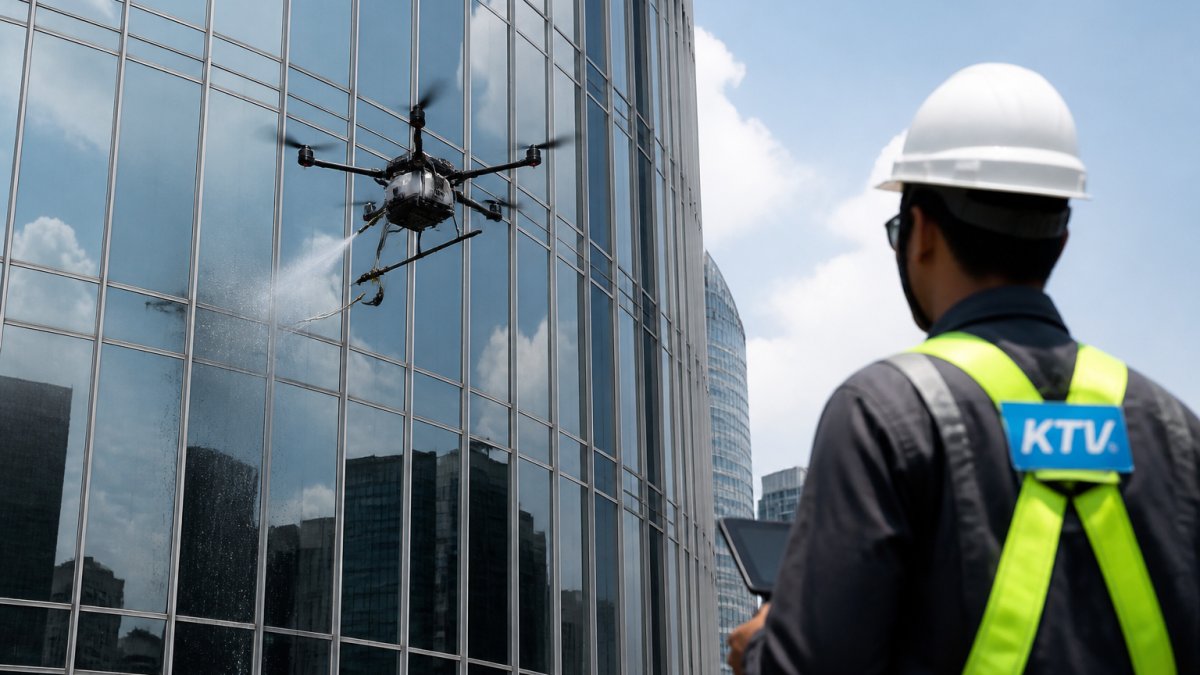
- Drone surveys with thermal imaging cover the full envelope without access equipment or work at height.
Table of Contents
- What Facade Preservation Means in 2026
- Facade Preservation Techniques Compared Side by Side
- Facade Inspection Methods That Catch Failure Early
- Facade Cleaning Methods by Material
- Sustainable Facade Maintenance and Energy Performance
- A Practical Facade Maintenance Checklist
- Choosing a Preservation Method for a Protected or Historic Facade
- Book a Drone Facade Survey Before You Commit
- Frequently Asked Questions
What Facade Preservation Means in 2026
Facade preservation is the practice of protecting a building's exterior envelope so it keeps performing, looks presentable, and stays compliant with safety and heritage rules. In 2026, the discipline has shifted from reactive repair toward planned, data-led upkeep. This review compares the main techniques, costs and trade-offs.
Preservation now starts with inspection data, not scaffolding. Owners who document facade condition early spend less on emergency repairs and can defend decisions to insurers, auditors and heritage authorities.
Three forces drive this: tighter insurance scrutiny of work at height, ESG reporting that expects evidence, and rising access-equipment costs that make early detection cheaper than late repair.
Below, we compare repair and restoration against overcladding, weigh inspection and cleaning methods by material, and set out a decision framework for protected buildings.
Facade Preservation Techniques Compared Side by Side
The right technique depends on what you are protecting: the original surface, the building's appearance, or its thermal and weather performance. Most owners need a mix. The comparison below adds criteria the market usually omits, heritage impact, reversibility, disruption and lifecycle behaviour.
| Technique | Best For | Heritage Impact | Reversibility | Disruption Profile | Relative Upfront Cost | Lifecycle Consideration | Main Risk |
|---|---|---|---|---|---|---|---|
| Repair and restoration | Sound substrate, heritage value | Low if materials matched | High | Moderate to high; access-heavy | Medium | Long service life if compatible | Poor material matching |
| Overcladding | Poor thermal performance, dated look | High; changes appearance | Medium if mechanically fixed | High; full elevation access | High | Weight and fixing loads add to structure | Trapped moisture behind new skin |
| Recladding | Failed original cladding | High; removes original | Low | High; removal and replacement | High | Weather sealing at joints drives performance | Joint failure and water ingress |
| Protective coating | Early weathering, budget limits | Low to medium | Low once cured | Low | Low | Short service life; frequent renewal | Coating traps moisture if substrate damp |
| Planned cleaning and inspection | All buildings | None | Not applicable | Low | Low | Extends life of every other technique | Missed defects if skipped |
Repair and Restoration of Existing Surfaces
Restoration keeps original material, which is often required where heritage protection applies. The work covers crack repair, repointing, stone consolidation and coating renewal.
Material compatibility decides success. A repair mortar harder and less porous than the original stone concentrates stress at the edges and causes spalling within a few seasons. Match strength, porosity and movement, not just colour. Hard cement mortar in a soft historic joint forces moisture through the stone, making the stone the sacrificial element.
A common mistake is restoring the visible facade while ignoring concealed fixings. Fixings corrode first and fail silently. Probe and test before you sign off on any surface repair, and record the fixings you cannot reach so the next inspection targets them.
Overcladding and Recladding Systems
Overcladding adds a new skin over the existing facade. Recladding removes and replaces failed cladding. Both improve thermal performance and weather resistance, and both change the building's appearance.
Large-format panels in fibre cement, architectural ceramics and stone-inspired finishes dominate current design because they reduce joint count and speed installation. The trade-off is weight: every system adds load to the structure and fixing zone, so a structural check comes before design.
Overcladding a facade with unresolved moisture problems traps water behind the new skin, diagnose and fix water ingress first. The same applies to thermal bridging: a new insulated skin interrupted at floor slabs and balconies delivers far less than its nominal performance, so continuity at junctions matters more than the panel's own rating.
Protective Coatings and Sealants
Coatings are the lowest-disruption option and the easiest to specify badly. A coating applied over a damp or contaminated substrate traps moisture and accelerates the decay it was meant to prevent. Surface preparation and substrate moisture testing are the whole job; the product is secondary. Budget for shorter renewal intervals rather than treating the first application as permanent.
Planned Cleaning and Inspection as a Technique
Cleaning and inspection are not maintenance overheads, they are the technique that extends the life of every other intervention. Dated, elevation-by-elevation imagery establishes a baseline against which future change can be measured, and it is the evidence that supports warranty claims, insurance positions and consent applications.
Facade Inspection Methods That Catch Failure Early
Facade inspection methods fall into three groups: visual survey, close-range physical inspection, and remote sensing. Each catches different defects, and combining them gives the most reliable picture.
Visual survey from the ground identifies staining, efflorescence and obvious cracking. It cannot see upper-level sealant failure. Close-range inspection by rope access or mobile elevating work platform reaches the surface but puts people at height and disrupts tenants.
Drone-based inspection with high-resolution imaging and thermal capture can cover the full envelope without access equipment, and thermal imaging can reveal moisture trapped behind cladding and insulation gaps that look fine to the eye.

Our complete guide to building inspection drones explains how autonomous drones capture facade condition data and produce audit-ready reports without putting anyone at height.
Facade Cleaning Methods by Material
Cleaning method must match the substrate. The wrong method removes the surface it was meant to protect, and the damage often appears months later.
- Glass and glazing: demineralised water with pure-water rinsing. Abrasive pads scratch coatings and cause haze.
- Natural stone: low-pressure washing with pH-neutral detergent. Acid cleaners etch limestone and marble.
- Concrete: soft washing with controlled pressure. High pressure drives water into hairline cracks.
- Fibre cement and ceramic panels: mild detergent and soft brushes. Solvent cleaners attack sealers.
- Timber: dry brushing and gentle washing, followed by re-oiling. Saturation causes swelling and rot.
- Metal and coated aluminium: pH-neutral cleaner and soft cloth. Chloride-based products accelerate corrosion.
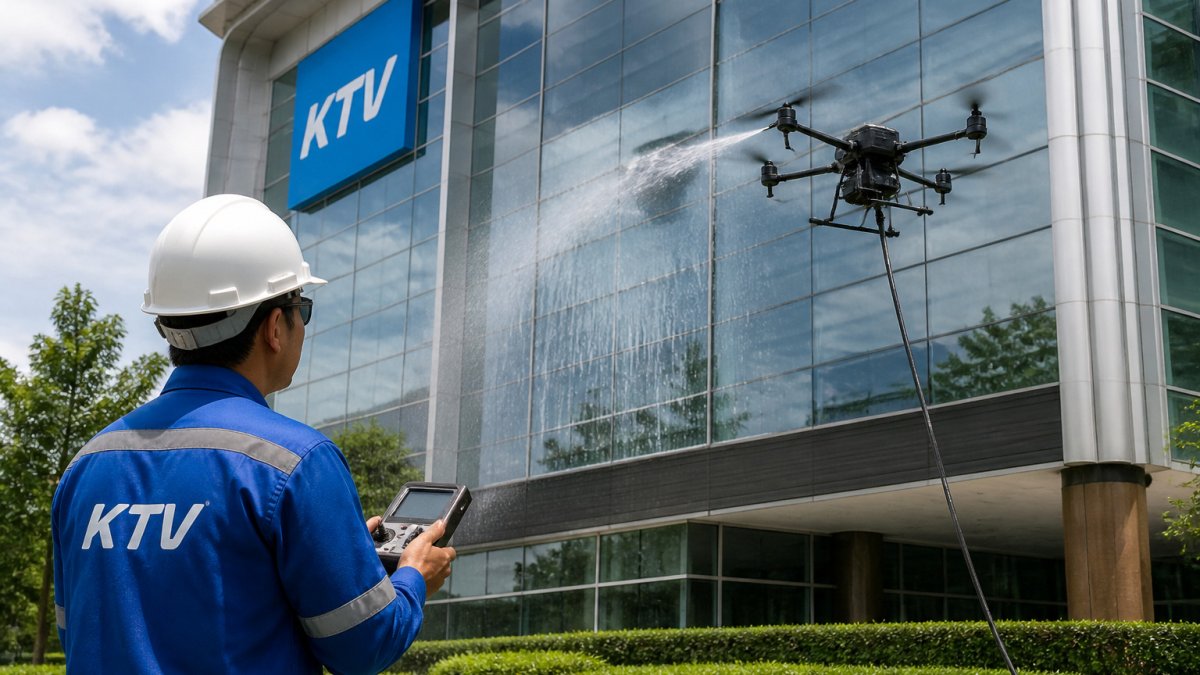
Chemical-free cleaning reduces runoff risk and protects landscaping and drainage, and simplifies compliance with environmental discharge expectations. Our guide to avoiding facade damage during exterior cleaning covers each material in more detail.
Sustainable Facade Maintenance and Energy Performance
Sustainable facade maintenance treats the envelope as an energy asset. A clean, intact facade reflects or shades as designed. A soiled or cracked one absorbs heat, admits moisture and raises cooling load.
Thermal performance depends on continuity. Gaps in insulation, failed sealant and saturated cladding all create thermal bridges that undermine the whole envelope. Inspection data identifies these before they show up in energy bills.
For ESG reporting, evidence matters more than intent. GRESB's reporting framework expects asset-level data that third parties can verify. Dated imagery can give auditors a record of condition and work completed.
Our guide to verifiable ESG data for building maintenance explains how to structure that evidence for reporting.
A Practical Facade Maintenance Checklist
Use this checklist as the backbone of an annual facade maintenance plan. Adjust frequency to the building's exposure, age and material.
- Record baseline condition with dated imagery of every elevation
- Inspect sealant joints and fixings twice yearly
- Check drainage outlets and weep holes before every rainy season
- Clean glass and glazing on a schedule matched to soiling rate
- Test thermal performance after any cladding or coating work
- Log every defect with location, severity and photograph
- Confirm access method and risk assessment before any work at height
- Review insurance and liability terms for each maintenance method
- File inspection reports for ESG and audit use
For a cost-focused version, our guide on planning cost effective facade maintenance for offices turns this checklist into a budgeted schedule.
Choosing a Preservation Method for a Protected or Historic Facade
Protected and historic buildings need a decision framework, not a default answer.
Step 1: Confirm the protection status and the controlling instrument. Check the listing, conservation designation or local conservation area status with the relevant authority before any design work.
Step 2: Assess significance element by element. Identify which parts of the facade carry architectural heritage value. Original stone, decorative panels, window proportions, cornices and hand-set fixings usually rank highest.
Step 3: Test reversibility before you test cost. Prefer methods that can be removed without damaging the original fabric.
Step 4: Compare lifecycle cost, not first invoice. Restoration, overcladding and recladding differ in upfront cost and service life.
Step 5: Check material compatibility as a mechanism, not a colour match. New materials in contact with original fabric must match movement, porosity, thermal expansion and vapour behaviour.
Step 6: Plan for disruption and reversibility of access. Low-impact retrofit methods that avoid full scaffolding reduce tenant disruption and construction risk.
Step 7: Confirm the regulatory pathway. Building work on protected or historic facades usually needs consent from the heritage authority in addition to ordinary building approval.
Owners often commission a design before confirming the constraint, then discover the design is not consentable.
Book a Drone Facade Survey Before You Commit
Before committing budget to any preservation method, get condition data. A drone facade survey gives you elevation-by-elevation imagery, thermal readings and a documented baseline you can hand to a designer, insurer or auditor.
At KTV Working Drone Thailand, we run fully autonomous drone surveys and cleaning with no scaffolding and no work at height. Our chemical-free process is up to 80% faster than traditional methods and cuts CO2 emissions by 96%. Every job produces auditable digital records suitable for ESG reporting, and our operations are CAAT-certified. We operate a network across 68 countries.
A survey first, a plan second, and work third is the sequence that protects both the building and the budget. Pricing depends on quantity, dates and delivery, so please contact KTV Working Drone Thailand or visit our website for a quote.
Book a drone facade survey and get condition data before you commit to a preservation method.
Facade preservation decisions carry real money and real liability, and the wrong method can cost more than it saves. If you are weighing restoration against overcladding, or need documented condition data for insurers and ESG auditors, start with a survey.
Frequently Asked Questions
What are the most effective modern facade preservation techniques?
Three approaches dominate: targeted repair and restoration of the existing surface, overcladding with large-format panels such as fiber cement or architectural ceramics, and preventive maintenance backed by regular inspection. The right choice depends on the condition of the substrate, heritage restrictions, budget and how much disruption the building can absorb. A facade preservation decision made without a condition survey usually costs more later, because incompatible repairs trap moisture and speed up deterioration.
How often should a building facade be inspected and maintained?
Most commercial towers benefit from a visual inspection every six to twelve months, with a closer condition survey every three to five years. Buildings near the coast, in heavy monsoon exposure or with known cracking need shorter intervals. Facade inspection methods range from ground-level photography to rope access and drone surveys. Drone capture is often the fastest way to record the full elevation and compare it against the previous year, which makes change easier to spot before it becomes a repair bill.
Can drones inspect and clean building facades?
Yes. Autonomous drones can capture high-resolution imagery of elevations and carry out chemical-free cleaning without scaffolding or abseiling. This removes work-at-height exposure for staff and reduces construction disruption for tenants. For facility teams, the practical gain is the auditable digital record: each flight produces dated images and reports that support ESG reporting and building regulations compliance. Weather and access still affect scheduling, so plan flights around the monsoon calendar and confirm certification and insurance with the provider.
How do you choose a facade cleaning method for different materials?
Match the method to the surface. Glass and glazing tolerate pure water and gentle mechanical action; natural stone and concrete need low-pressure cleaning to avoid eroding the surface; timber and textured finishes require the mildest option available. Whatever the material, test a small area first and keep a record of what was used, so future maintenance does not apply an incompatible product.