 blog
How to Plan Cost Effective Facade Maintenance for Offices
Last Updated: October 26, 2026
Quick Summary
Cost effective facade maintenance for offices means scheduling cleaning and inspection together on one access mobilisation instead of reacting to failures. Bundle access, inspect twice a year, and track all five cost lines so small defects are caught before they become capital shocks.
- Reactive work costs more because access is hired at short notice and defects are found later.
- Access is the largest single cost line in most facade programmes.
- Inspect sealant joints, glazing, cladding fixings, drainage, coatings and access hardware at least twice a year.
- Build a twelve-month plan pairing each activity with an access method, budget line and owner.
- Compare annual total cost across all five cost lines, not the per-clean price alone.
Table of Contents
- Why Facade Maintenance Costs Spiral Without a Plan
- Facade Maintenance Cost Factors That Decide Your Budget
- Commercial Building Facade Cleaning Methods Compared
- The Facade Inspection Checklist for Buildings You Should Use
- Total Cost of Ownership Across the Facade Lifecycle
- Building an Office Building Facade Maintenance Plan
- Book a Facade Assessment Before Your Next Budget Cycle
- Frequently Asked Questions
Why Facade Maintenance Costs Spiral Without a Plan
Most office towers do not have a facade budget. They have a facade emergency. A seal fails above the tenth floor, water tracks into a tenant's ceiling, and the fix lands as an unbudgeted line item approved in a hurry.
At KTV Working Drone Thailand, we see the same pattern across commercial buildings: maintenance is triggered by visible failure rather than by schedule. The result is predictable.
Preventive Versus Reactive: The Cost Gap
Reactive work always costs more than planned work, for three reasons. Access is hired at short notice. Repairs are scoped under pressure. And defects are found later, when they are larger.
Preventive facade maintenance flips each of those. You schedule access once and use it for cleaning and inspection together. You fix hairline cracks before water reaches the substrate.
The gap is not a small percentage. It is the difference between a recurring operating cost and a capital shock.
Facade Maintenance Cost Factors That Decide Your Budget
Four variables drive almost every quotation: height and access, facade material, cleaning frequency, and how much inspection and reporting you need. Get those four right and the budget becomes predictable.
Access, Height and Surface: Where the Money Goes
Access is the largest single cost line in most facade programmes. Scaffolding requires erection time, permits and a long site presence.
Surface matters too. Glass curtain wall cleans quickly and predictably.
Frequency compounds everything. Cleaning twice as often roughly doubles the cleaning line, but it can reduce repair spend by catching degradation early.
For a transparent breakdown of how access choice changes the invoice, see our guide to commercial building cleaning costs in Bangkok.
Commercial Building Facade Cleaning Methods Compared
Each access method trades cost against risk, speed and disruption. The mistake most offices make is comparing only the quoted price per clean.
| Method | Setup cost profile | Recurring cost profile | Safety and risk | Best suited to | Disruption to tenants |
|---|---|---|---|---|---|
| Scaffolding | High, erection, dismantling, permits, hoarding, long site presence | Low per clean once standing, but only if the scaffold stays up for the whole programme | Working-at-height exposure for every operative; dropped-object risk | Low-rise offices, one-off refurbishment, repairs bundled with cleaning | High, weeks on site, window access blocked, noise and privacy loss |
| Rope access | Medium, anchor certification, rigging, rescue plan | High per clean; weather-dependent so re-mobilisation is common | Highest work-at-height exposure; requires certified technicians and rescue arrangements | Mid-rise to high-rise with certified anchor points and irregular geometry | Medium, short presence but visible abseilers outside windows |
| Mobile elevating work platform | Medium, hire, ground protection, traffic management | Medium per clean; limited by reach and ground conditions | Lower than rope access but still at-height; ground crew required | Low-rise to mid-rise offices with clear hardstanding | Medium, ground-level exclusion zones, parking loss |
| Permanent building maintenance unit | High capital, installed system, structural provisions, commissioning | Medium to high, the unit itself needs statutory inspection and maintenance | Controlled access but the unit is a piece of plant that must be maintained | High-rise offices designed with a BMU from the outset | Low to medium, quick deployment but roof access and davit use required |
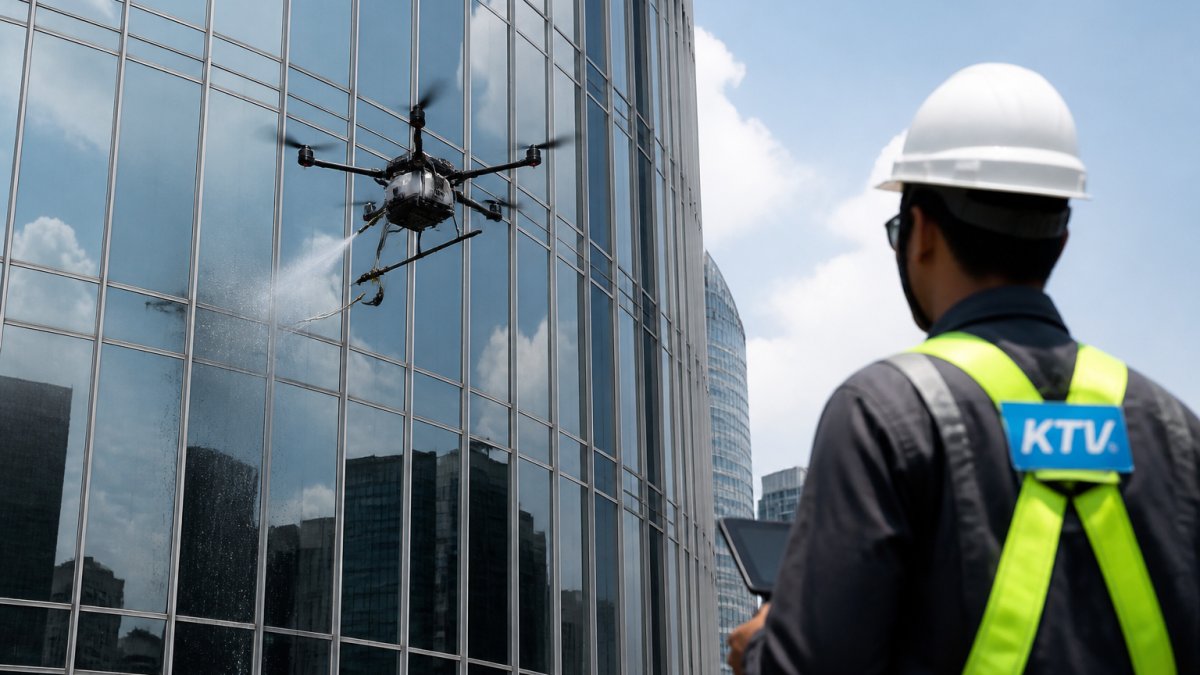
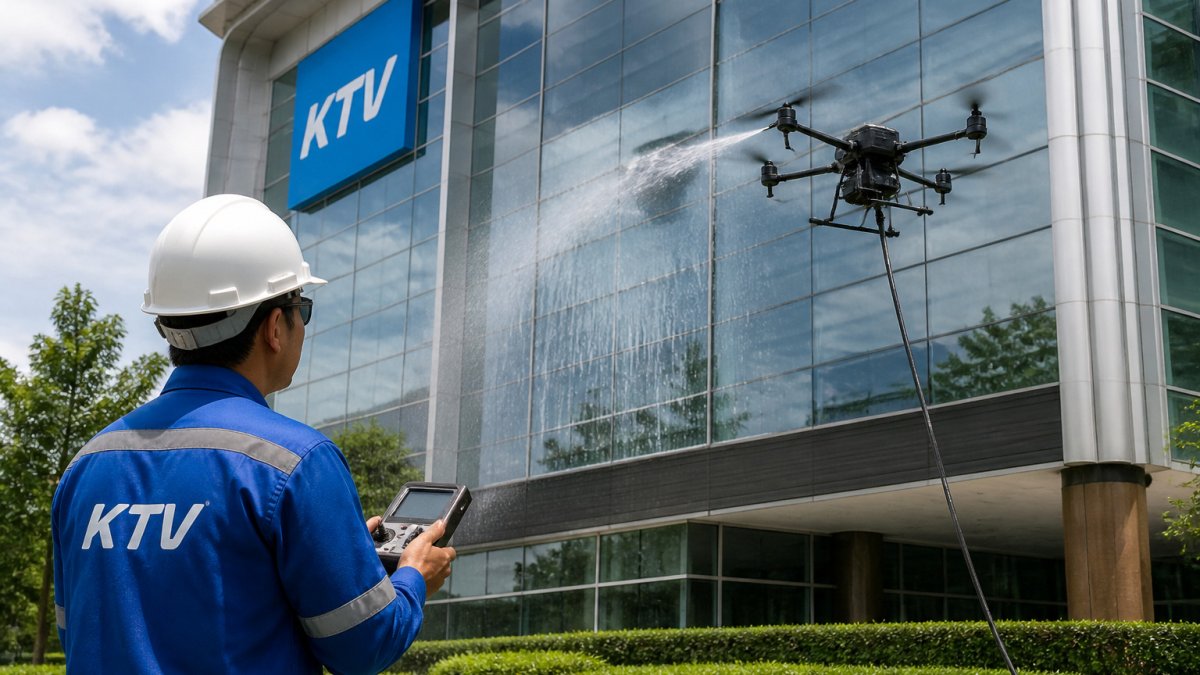
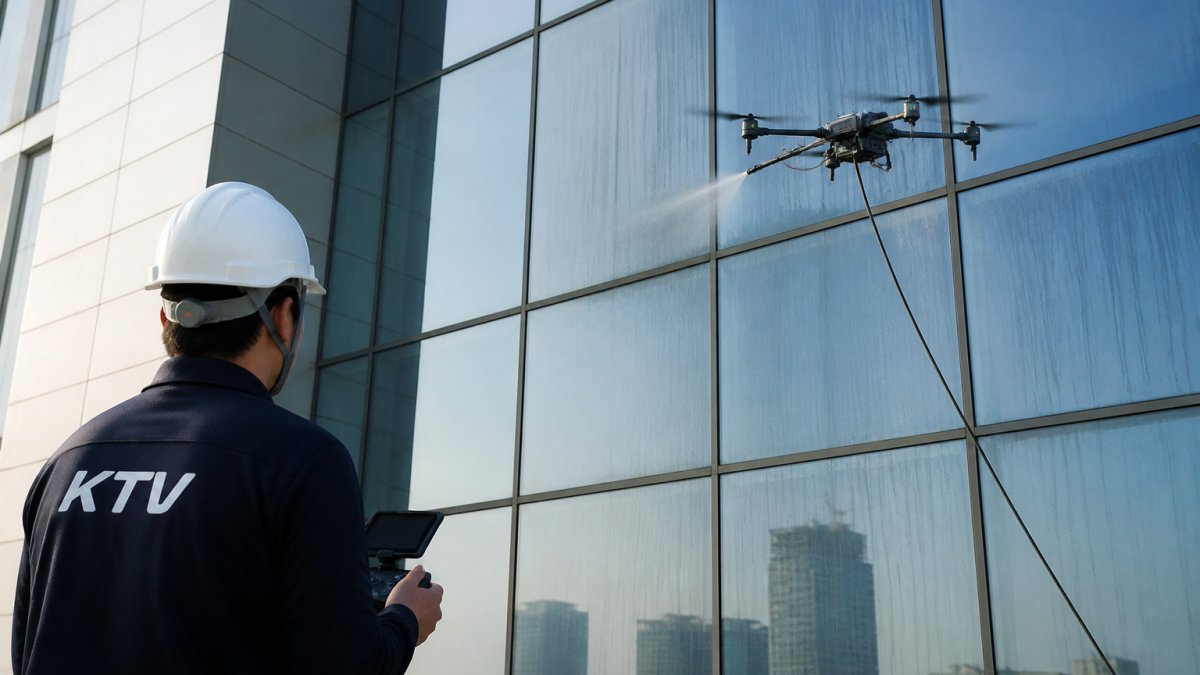
| Autonomous drone cleaning | Low, launch from roof or ground, no rigging or scaffold | Lowest per cycle; no access build, no at-height crew | Zero work-at-height risk for cleaning operatives; aviation and operator certification required | Mid-rise and high-rise offices with regular cleaning cycles | Low, short windows, no scaffolding, no ground exclusion beyond a launch zone |
The pattern is consistent: the more equipment you have to build, rig or hire, the more the cost per clean rises, and the more the schedule is dictated by access logistics rather than by the facade's actual condition. Our comparison of drone facade cleaning against traditional methods sets out the safety, speed and reporting differences side by side.
How to Choose Between Methods for an Office Building
Work through four questions in order:
- What is the building height and geometry? Below roughly six storeys, a mobile elevating work platform or scaffold is often practical. Above that, rope access, a BMU or drone cleaning become the realistic options.
- Is there a permanent BMU? If yes, price its statutory inspection and maintenance into the comparison, a BMU is plant, not a free asset.
- How often will you clean? The more frequent the cycle, the more a low-setup method wins on annual cost.
- What disruption can tenants tolerate? Scaffolding for weeks is a tenant-relations cost as well as a direct cost. Rope access and drones minimise site presence.
A common pattern is that offices bundle cleaning and inspection into the same access mobilisation. That bundling is only efficient if the chosen method can carry inspection equipment and produce dated photographic records, which is where drone platforms and rope-access crews with cameras differ sharply from a scaffold that is erected only for painting.
The Facade Inspection Checklist for Buildings You Should Use
A facade inspection checklist for buildings should cover six areas: sealant joints, glazing and frames, cladding fixings, drainage and staining, surface coatings, and access hardware. Inspect each at least twice a year, and after any severe storm.
- Sealant joints: check for cracking, shrinkage and adhesion loss
- Glazing and frames: look for cracked panes, failed gaskets, water ingress
- Cladding fixings: probe for loose panels and corrosion at fixings
- Drainage: confirm weep holes and outlets are clear
Record every finding with a photo, a location and a severity rating. Drone inspection captures that evidence without putting anyone at height, and our complete guide to building inspection drones explains how the data becomes an audit-ready report.
Total Cost of Ownership Across the Facade Lifecycle
Total cost of ownership is the sum of cleaning, inspection, repair, access and eventual refurbishment over the facade's service life. Most offices only track the first line. The gap between a well-run and a poorly-run facade programme is rarely visible in any single invoice, it accumulates across the lifecycle.
The Five Cost Lines to Track
Build your TCO model around five lines, each recorded annually:
- Routine cleaning, cost per cycle multiplied by cycles per year, including access setup.
- Inspection and reporting, condition surveys, photographic records, and any specialist testing such as sealant adhesion checks.
- Reactive repairs, sealant replacement, glazing swaps, panel re-fixing, and the access cost of getting to each defect.
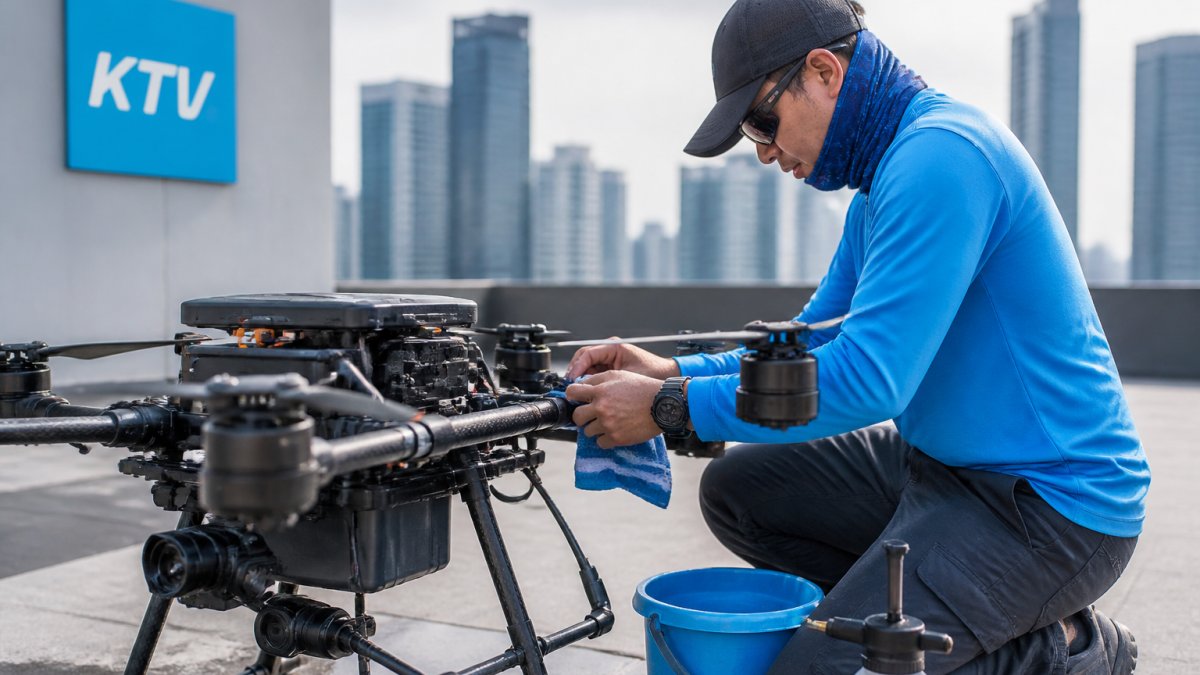
- Access equipment, scaffold hire, rope-access rigging, BMU inspection and maintenance, or drone operations.
- Refurbishment and replacement, recoating, re-sealing, panel replacement, and eventual system replacement, spread across the years they fall.
Two buildings with identical facades can carry very different lifecycle costs. The difference is usually maintenance strategy. A building cleaned and inspected on schedule keeps its sealant performing, delays coating failure, and pushes refurbishment further out. A building left to fail accelerates every downstream cost.
How Deferred Maintenance Compounds
Deferred maintenance is the quiet killer here. A maintenance backlog does not sit still; it grows, because water finds every unsealed joint. Consider the mechanism:
- A failed sealant joint lets water into the substrate.
- Water ingress corrodes fixings and saturates insulation.
- Corroded fixings require panel removal to inspect and replace.
- Panel removal requires access that was not planned, often at short notice.
- The repair now includes substrate drying, fixing replacement and re-sealing, not just a bead of sealant.
Each step adds a cost line that a scheduled inspection would have caught at the first stage. That is why the cheapest-looking programme, clean only when visibly dirty, repair only when something fails, is usually the most expensive over ten years.
Comparing Upfront Investment with Recurring Cost
When you compare a low-setup method such as drone cleaning against a high-setup method such as scaffolding, do not compare the per-clean price alone. Compare the annual total across all five cost lines.
The same logic applies to refurbishment timing.
Our commercial building cleaning costs in Bangkok guide sets out how access choice changes the invoice, which is the first input to any TCO model.
Building an Office Building Facade Maintenance Plan
An office building facade maintenance plan is a twelve-month schedule that pairs each activity with an access method, a budget line and an owner.
- Survey the facade and record current condition with dated photos.
- Set cleaning frequency by material and exposure, not by habit.
- Schedule inspection twice yearly, plus post-storm checks.
- Bundle access so cleaning and inspection share one mobilisation.
- Ring-fence a repair allowance for findings, so surprises do not become emergencies.
- Log every job digitally so the next budget cycle starts from evidence.
Two things go wrong most often. Teams clean on a fixed calendar regardless of how the facade is actually performing. And teams inspect without cleaning, then pay for access twice.
Watch out: a plan that lists activities but no reporting requirement will not survive an audit or a tenant dispute. Insist on dated, photographic records for every visit.
When you are ready to build the schedule around an actual service, our autonomous drone facade and window cleaning page covers how a cycle runs, including chemical-free cleaning and digital QA reporting.
Book a Facade Assessment Before Your Next Budget Cycle
The cheapest facade programme is the one designed before the failures start.
KTV Working Drone Thailand provides CAAT-certified autonomous drone operations with zero work-at-height risk, chemical-free cleaning, and independently verifiable ESG data for GRESB reporting.
Get started with KTV Working Drone Thailand and put your next facade budget on evidence instead of guesswork. Contact our team to arrange a facade assessment.
Frequently Asked Questions
How often should an office building facade be inspected?
Most office towers benefit from a visual inspection every 6 to 12 months, with a closer condition assessment every 2 to 3 years or after severe storms. Glass and aluminium curtain walls show sealant wear and anchor corrosion earlier than solid cladding, so high-rise buildings with heavy rain exposure should sit at the shorter end. Keep a written record of each inspection: it feeds your facade maintenance budget, supports insurance discussions and gives auditors a dated trail.
Is drone facade cleaning more cost effective than scaffolding?
For most occupied office buildings, yes. Scaffolding carries erection and dismantling labour, permits, and weeks of disruption, and those costs recur every cycle. A drone-based approach removes work at height and needs no rigging. Pricing depends on building height, surface area and access, so request a quote rather than assuming a rate. The bigger saving usually comes from avoided tenant disruption and lower safety exposure.
What factors affect the cost of office facade maintenance?
The main drivers are building height and surface area, facade material (glass, aluminium, stone or composite), access method, cleaning frequency, and how much repair work is deferred. Labour and equipment for work at height dominate traditional quotes. Scheduling also matters: night or weekend work to protect tenant operations costs more. A clear facade maintenance plan that bundles inspection, cleaning and minor repairs into one contract usually beats buying each service separately.
What should an office facade maintenance plan include?
A workable plan covers four things: an inspection schedule with a condition assessment checklist, a cleaning frequency matched to the facade material and local pollution, a repair and refurbishment budget with trigger points, and a named access method with safety documentation. Add a record-keeping system so every job produces dated evidence. Review the plan annually against actual spend. Facility managers who track cost per square metre per cycle spot deferred maintenance before it turns into facade replacement.