 blog
Are High Rise Exterior Cleaning Solutions Worth It in 2026?
Last Updated: November 2, 2026
Quick Summary
High rise exterior cleaning solutions are worth it in 2026 when the method matches your building's height, facade material, access, and insurer's risk tolerance. Facility teams weigh scaffolding, abseiling, skylifts, and autonomous drone washing, each with a different cost and safety profile. Drone washing removes work-at-height risk entirely, while scaffolding remains the only option when the facade itself needs repair.
- Scaffolding is the only option when the facade itself needs repair, but it is the slowest and most disruptive route.
- Abseiling suits buildings with awkward shapes, setbacks, or tight roof access, though every descent is a work-at-height event.
- Skylifts work well for low and mid-rise facades with clear ground access but cannot reach above a certain height.
- Drone washing fits tall, flat, repetitive facades such as glass curtain walls and metal cladding, with no one leaving the roof.
- Above 15 storeys, or anywhere fall risk is hard to control, the calculation shifts hard toward autonomous washing.
Table of Contents
- High Rise Exterior Cleaning Solutions Compared
- High-Rise Window Cleaning Methods: Which One Fits Your Tower?
- Drone Facade Cleaning: How Autonomous Washing Works
- High-Rise Facade Cleaning Cost: What Drives the Price
- High-Rise Cleaning Safety Procedures That Actually Apply
- Application Methods and Where Each Solution Wins
- Get a Quote for Your High Rise Exterior Cleaning Plan
- Frequently Asked Questions
High Rise Exterior Cleaning Solutions Compared
High rise exterior cleaning solutions are the methods and equipment used to wash the outside surfaces of tall buildings, and the right choice in 2026 depends on height, facade material, access, and how much risk your insurer will tolerate. Facility teams typically weigh four options: scaffolding, abseiling, skylifts, and autonomous drone washing. Each carries a different cost profile and a different safety exposure.
The comparison below is the short version. The rest of this article explains where each method wins.
| Solution | Setup Time | Work-at-Height Risk | Best For | Main Drawback |
|---|---|---|---|---|
| Scaffolding | Days to weeks | High | Full facade repairs | Slow, disrupts tenants |
| Abseiling | Hours | High | Complex, irregular shapes | Weather-dependent |
| Skylift | Hours | Moderate | Low to mid-rise towers | Height limits |
| Drone washing | Minutes | None at height | Tall glass and cladding | Needs flight approval |
Scaffolding remains the only option when the facade itself needs repair. For routine washing, though, it is the slowest and most disruptive route on the list.
High-Rise Window Cleaning Methods: Which One Fits Your Tower?
The best high-rise window cleaning method is the one that matches your building's height, geometry, and access points, not the one with the lowest quoted day rate. A 30-storey glass tower and a 12-storey concrete block rarely suit the same approach.
Here is how the four methods divide up in practice:
- Scaffolding: Best when crews must reach the surface by hand for repairs or sealing. It takes days to erect and blocks light and views for tenants.
- Abseiling: Suits buildings with awkward shapes, setbacks, or tight roof access. Skilled rope technicians work fast, but every descent is a work-at-height event.
- Skylift: Efficient for low and mid-rise facades with clear ground access. Above a certain height, the equipment simply cannot reach.
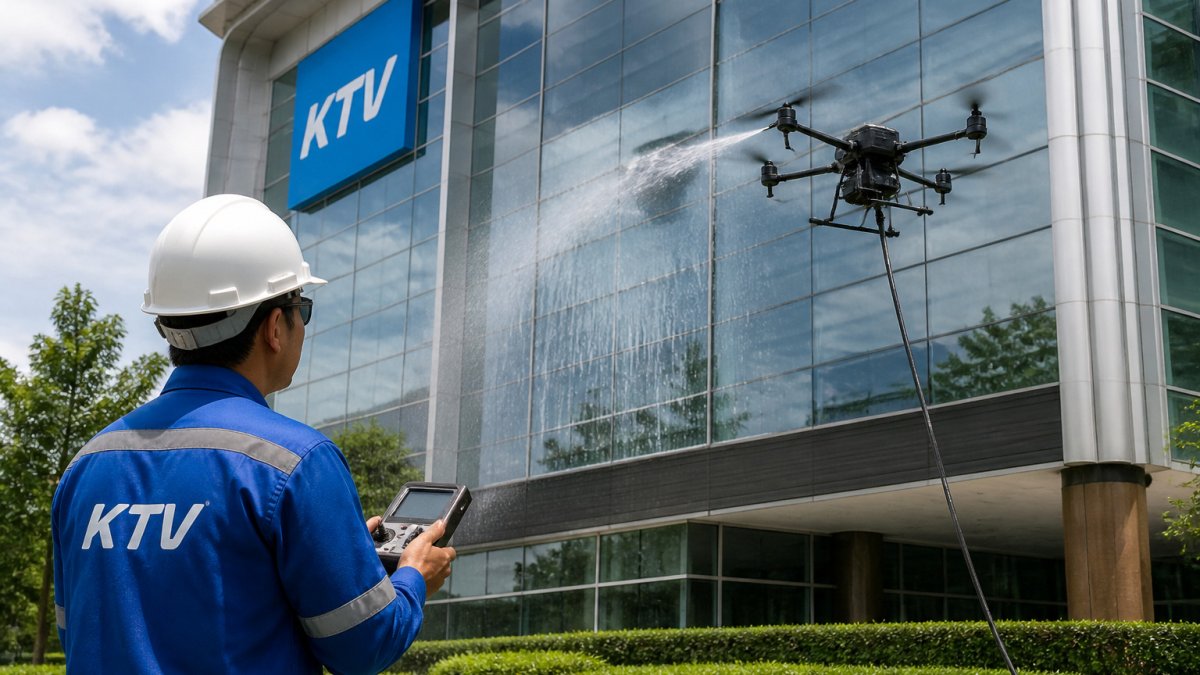
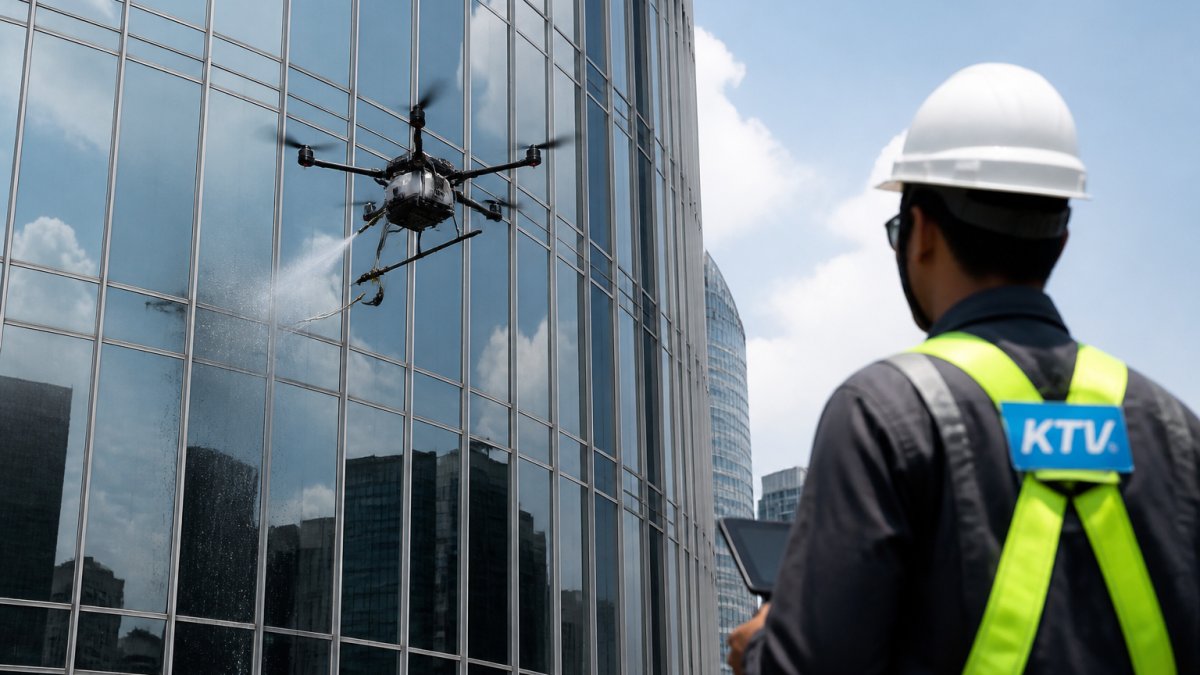
- Autonomous drone washing: Fits tall, flat, repetitive facades such as glass curtain walls and metal cladding. No one leaves the roof.
A common mistake is choosing a method before checking roof access and flight permissions. Those two constraints eliminate options faster than price does.
Drone Facade Cleaning: How Autonomous Washing Works
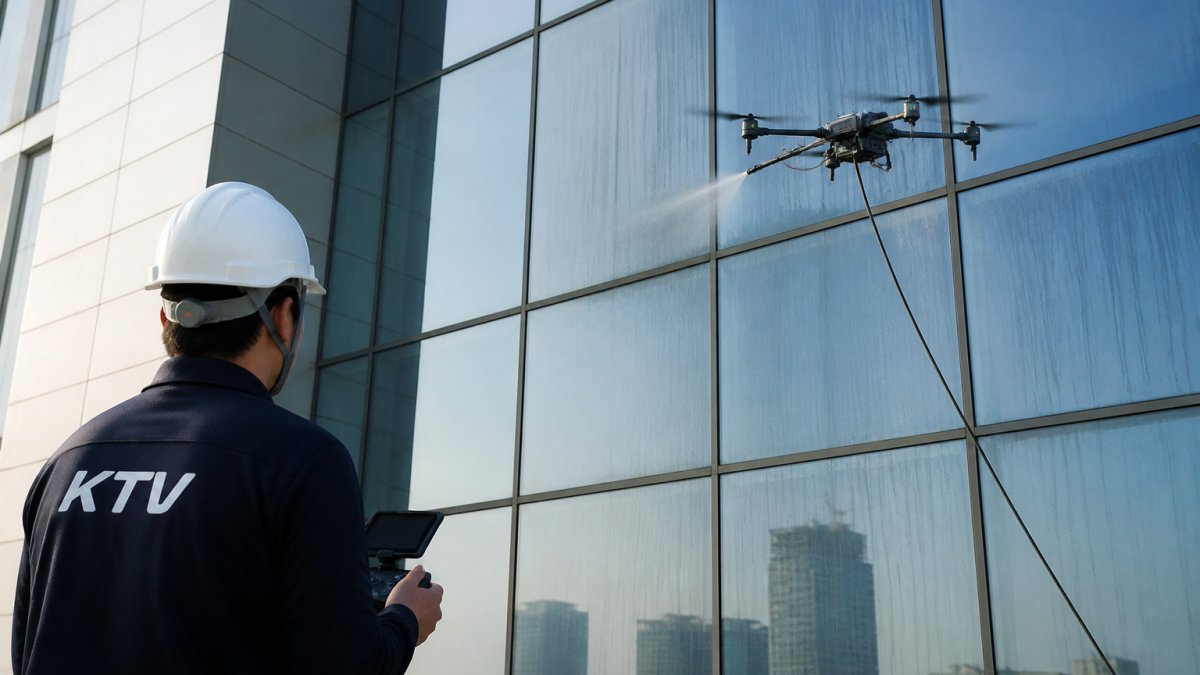
Drone facade cleaning is the use of unmanned aircraft to spray and rinse building exteriors along a pre-programmed flight path, with no rope access or scaffolding involved. The drone flies a mapped route, keeps a set distance from the surface, and applies water through nozzles at controlled pressure.
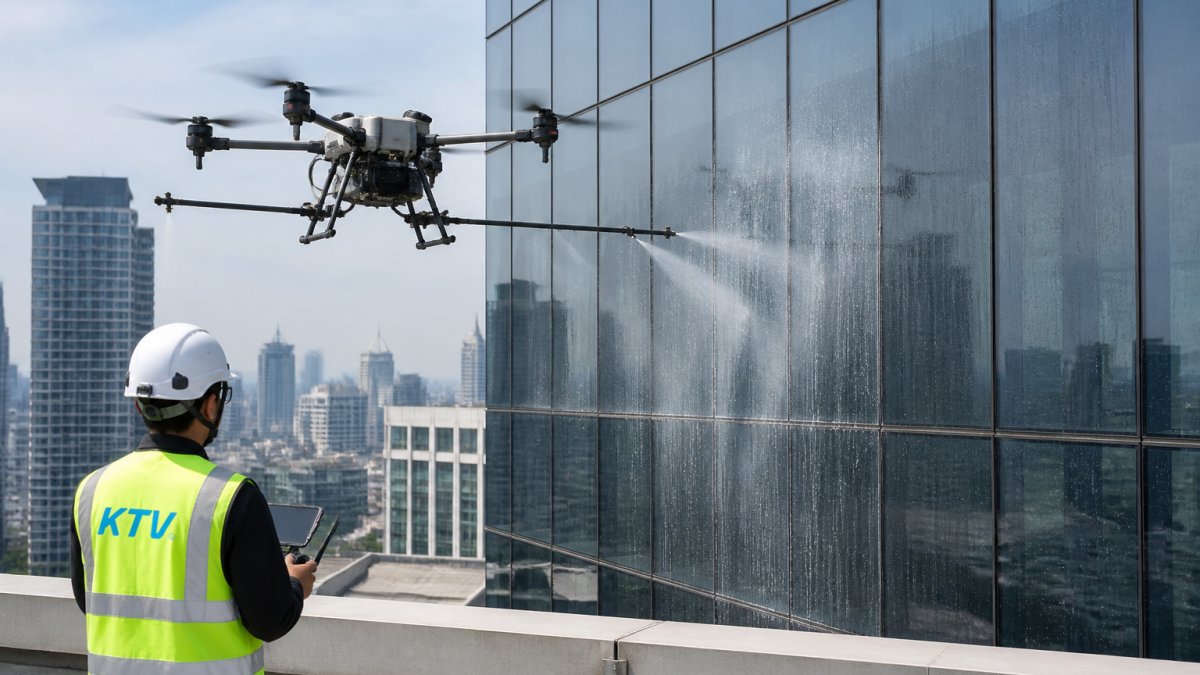
The mechanics matter because they decide the result.
What most guides miss is the chemistry question.
The technical overview of autonomous drone cleaning explains flight programming, sensor systems, and the roof anchoring setup in more depth.
High-Rise Facade Cleaning Cost: What Drives the Price
High-rise facade cleaning cost is driven by four things: building height and surface area, facade material, access difficulty, and how often you clean. Method choice sits on top of all four, because scaffolding and abseiling add labour, permits, and time that drone work does not.
Pricing depends on the building and the scope of work. For current prices or a quote, visit the KTV Working Drone Thailand website. Cost is typically shaped by the following factors:
- Height and area: More square metres means more flight time, but drone coverage scales faster than rope access.
- Facade material: Glass, aluminium cladding, and stone each need different pressure and nozzle settings.
- Access and permissions: Roof access, flight approval, and ground cordons all carry administrative time.
- Frequency: Buildings on a fixed cycle avoid the premium that comes with emergency or one-off cleans.
Watch out: a low headline quote often excludes permits, water supply, and re-cleaning after weather delays. Ask what is included before comparing two numbers.
The 2026 guide to drone facade cleaning costs breaks down these factors in more detail.
High-Rise Cleaning Safety Procedures That Actually Apply
Safety procedures for high-rise cleaning in 2026 centre on removing work at height wherever possible, then controlling what remains. Thai labour law places duties on employers to assess and control risks to workers, including work at height. Check the current requirements directly with the official source. Rather than rely on a summary here, check the current requirements directly with the Department of Labour Protection and Welfare.
In practice, the safety hierarchy is straightforward:
- Eliminate the hazard. If no one goes up the facade, falls cannot happen.
- Control access. Cordons, roof permits, and trained spotters.
- Verify competence. Rope technicians and drone operators should hold current certification.
- Document everything. Method statements, inspection records, and incident logs.
Drone washing sits at the top of this hierarchy because it removes the fall hazard rather than managing it. That distinction matters to insurers, who price risk on exposure rather than intention.
KTV Working Drone Thailand holds CAAT-certified operations, and its work produces auditable digital records. The guide to eliminating work-at-height risk covers the regulatory side in full.
Application Methods and Where Each Solution Wins
Application method decides the finish. Abseiling and scaffolding apply water and detergent by hand, which gives close control on ornate or damaged surfaces but varies with the technician. Skylifts do the same from a platform.
Where each wins:
- Heritage and complex facades: Abseiling or scaffolding, because hand work handles detail.
- Low-rise with ground access: Skylift, for speed and simplicity.
- Tall glass and cladding towers: Drone washing, for speed, safety, and even coverage.
- Mixed portfolios: A blend, with drones on the tall flat elevations and rope access on the awkward corners.
We would not claim drones suit every building. They do not. On a 10-storey building with a simple facade and clear ground access, a skylift is often the sensible call. Above 15 storeys, or anywhere the fall risk is hard to control, the calculation shifts hard toward autonomous washing.
For a direct side-by-side of methods, safety, speed, and reporting, see our comparison of drone cleaning and traditional methods.
Get a Quote for Your High Rise Exterior Cleaning Plan
The real challenge is not picking a method on paper. It is building a cleaning plan that satisfies your insurer, your tenants, and your sustainability reporting at the same time. Most facility teams are juggling all three with a schedule built around scaffolding availability.
We can help. KTV Working Drone Thailand provides fully autonomous drone facade and window cleaning with zero work-at-height risk, a chemical-free process, and independently verifiable ESG data that stands up to third-party audit. KTV Working Drone Thailand operates a 68-country global network, and its work produces auditable digital records for your compliance file.
Get started with KTV Working Drone Thailand and turn your exterior maintenance into a documented, low-risk programme. Request a quote for autonomous facade and window cleaning and we will scope your building.
Frequently Asked Questions
How do drones clean high-rise building facades?
An autonomous drone flies a pre-programmed route along the facade, spraying water onto the surface. Because it flies without a tether, it can reach glass, concrete and metal panels at height without scaffolding or rope access. A ground crew sets up the water supply and monitors the flight, and the whole job is recorded digitally. No one works at height during the job.
Is drone facade cleaning safer than rope access?
It removes the main hazard entirely: nobody hangs from the building. Rope access and suspended platforms depend on anchor points, harnesses and trained technicians, and any failure is a fall risk. Drone facade cleaning keeps the crew on the ground or roof, so the work-at-height exposure disappears. Ask any provider for their certification, pilot records and insurance before booking, and check that the drone operation is permitted under current aviation rules.
How much does high-rise exterior cleaning cost?
High-rise facade cleaning cost depends on the building height, total facade area, surface type, access difficulty and how often you clean. A single tower with easy roof access is cheaper per square metre than a complex with setbacks, louvres and multiple elevations. Drone methods usually cut the access setup, which is where most of the cost sits. Pricing depends on the site survey, so ask for a quote based on your building rather than a per-square-metre estimate.
How often should a high-rise building exterior be cleaned?
Most commercial towers in humid, rainy climates need a facade wash two to four times a year, with glass elevations cleaned more often than concrete or metal panels. Buildings near busy roads, construction or industrial zones collect dirt faster and may need quarterly cleaning. Solar panels on rooftops usually need cleaning every few months to hold efficiency. A drone survey can show how much soil is actually building up, which helps you set a realistic cycle instead of guessing.
Your facade is an asset with a maintenance cycle, and every year of delay shortens it. If you want a cleaning plan that removes the fall hazard and gives your auditors something concrete to review, we are ready to scope it. Get started with KTV Working Drone Thailand and put your high-rise exterior on a schedule you can prove.