 how-to
How to Improve Automated Solar Panel Cleaning Efficiency
Last Updated: October 30, 2026
Quick Summary
Improve automated solar panel cleaning efficiency by matching the system to your site: robotic rails for large flat arrays, drones for complex rooftops, and semi-automated gear for small sites. Set cleaning frequency from measured output decline rather than a fixed calendar, and use gentle, frequent cycles to avoid scratching glass.
- Robotic systems suit large flat ground arrays but add rail weight, wind load and moving-part wear.
- Drone cleaning needs no array hardware but is limited by weather windows and operator certification.
- Set frequency by tracking output decline after a full clean, not by a copied calendar.
- Gentle, frequent cleaning cycles beat aggressive, rare scrubbing that scratches glass.
- Calculate payback as recovered kWh times tariff minus annual cleaning cost, including maintenance.
Table of Contents
- Why Dust and Debris Cut Solar Panel Output
- How to Choose an Automatic Solar Panel Cleaning System
- How to Set the Right Solar Panel Cleaning Frequency
- What to Expect from Solar Panel Energy Output After Cleaning
- Solar Panel Cleaning System Maintenance and Long-Term Durability
- How to Calculate the ROI of Automated Cleaning
- Book a Drone Cleaning Assessment for Your Solar Array
- Frequently Asked Questions
Why Dust and Debris Cut Solar Panel Output
Dust is the quiet thief of solar revenue. Every layer of grime on a photovoltaic module blocks sunlight before it ever reaches the cells, and the loss compounds across an entire array.
Soiling loss is the term for the gap between what a clean panel could produce and what it actually generates. In high-dust environments, that gap widens fast.
The damage goes beyond lost kWh output. Persistent soiling raises module temperature, and heat cuts energy conversion efficiency further.
Output often drifts down slowly, and the loss can go unnoticed until the quarterly production report lands.
- Dust and grit block direct sunlight
- Bird droppings create permanent hot spots if left
- Pollen and smoke form a sticky film that traps more dust
- Heat buildup from dirty glass lowers energy conversion
The fix is not more panels. It is a cleaning cycle that matches your site's soiling rate.
How to Choose an Automatic Solar Panel Cleaning System
Choosing an automatic solar panel cleaning system starts with one question: what does your site actually need? The right answer depends on array size, roof access, water availability and how fast dirt builds up.
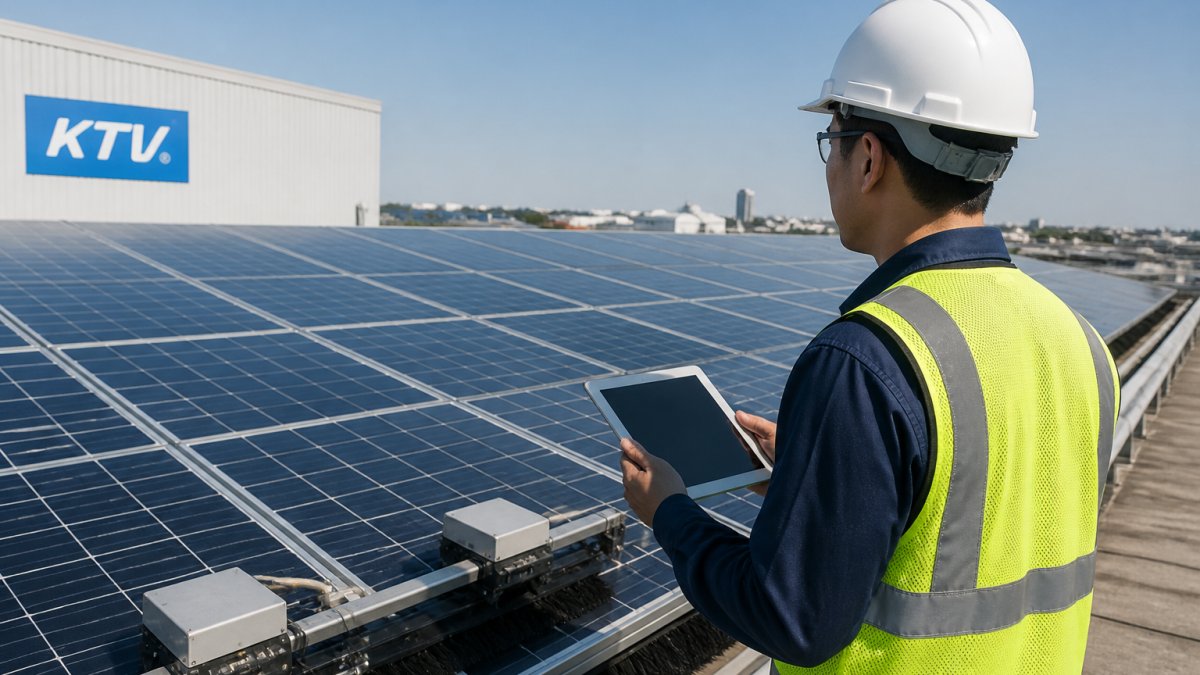
Most buyers compare three families of technology. Each has a clear best-fit case, and picking the wrong one wastes capital. The table below is a starting point; the detail underneath is what actually decides the purchase.
Robotic, Drone and Semi-Automated Options Compared
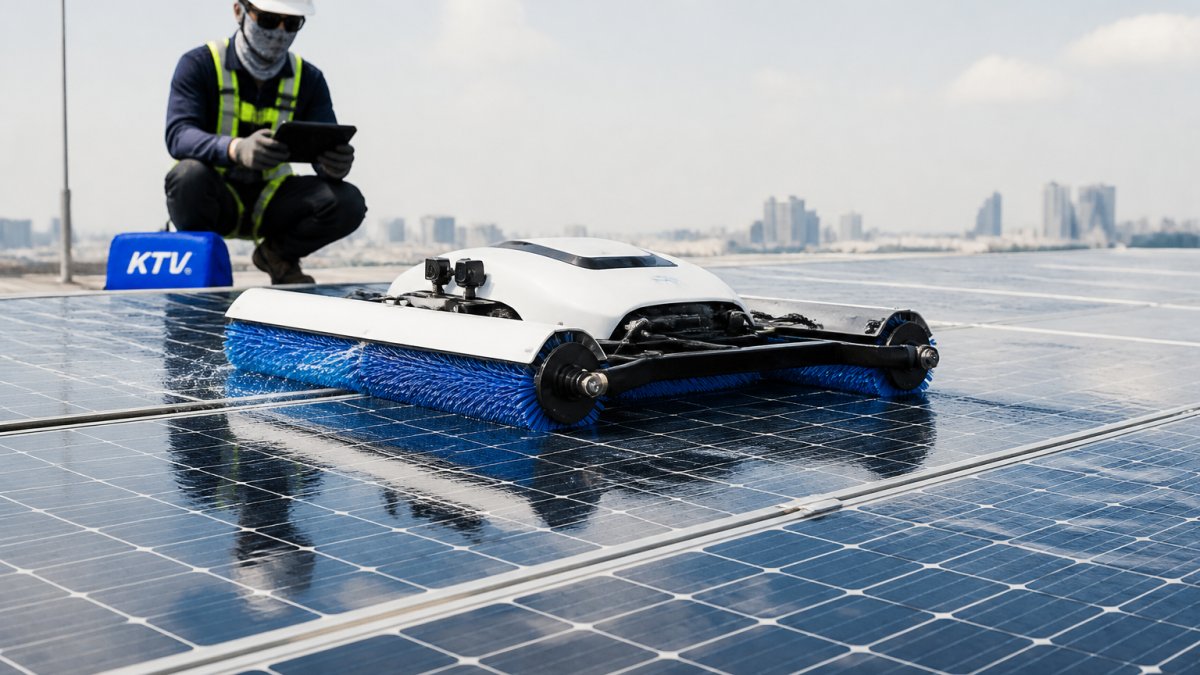
Robotic cleaning solutions mount directly on the panel rows and travel along rails or a track fixed to the mounting structure. They suit large, flat, ground-mounted arrays where the hardware can be installed once and left to run on a schedule.
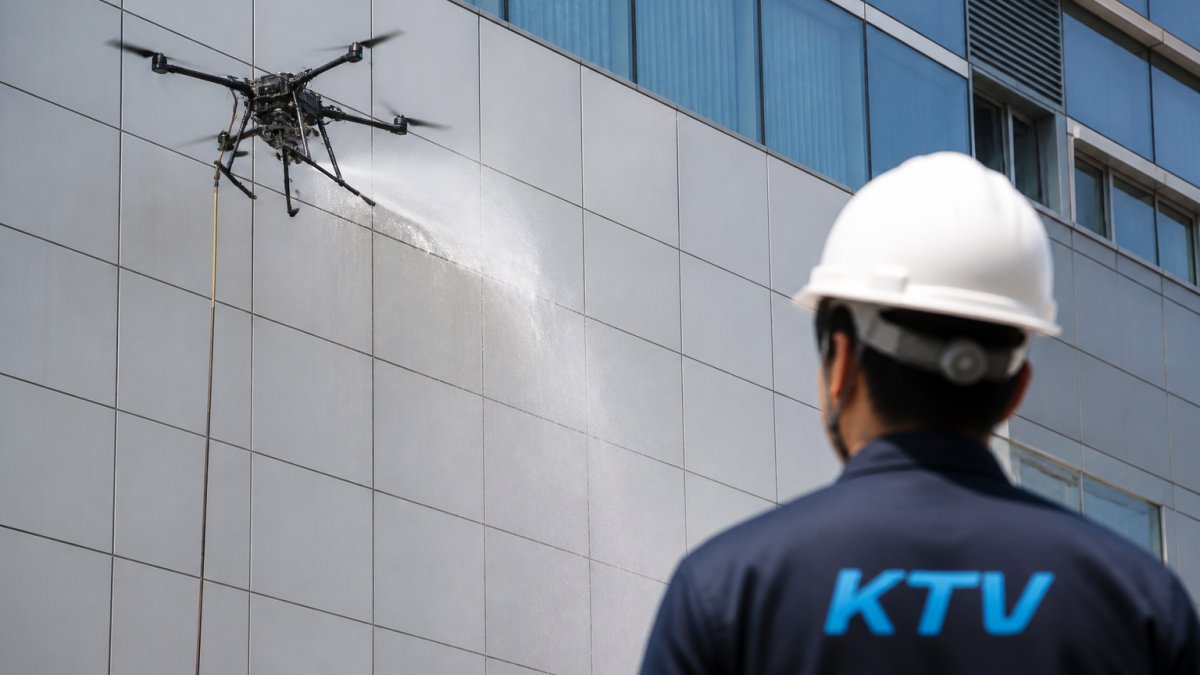
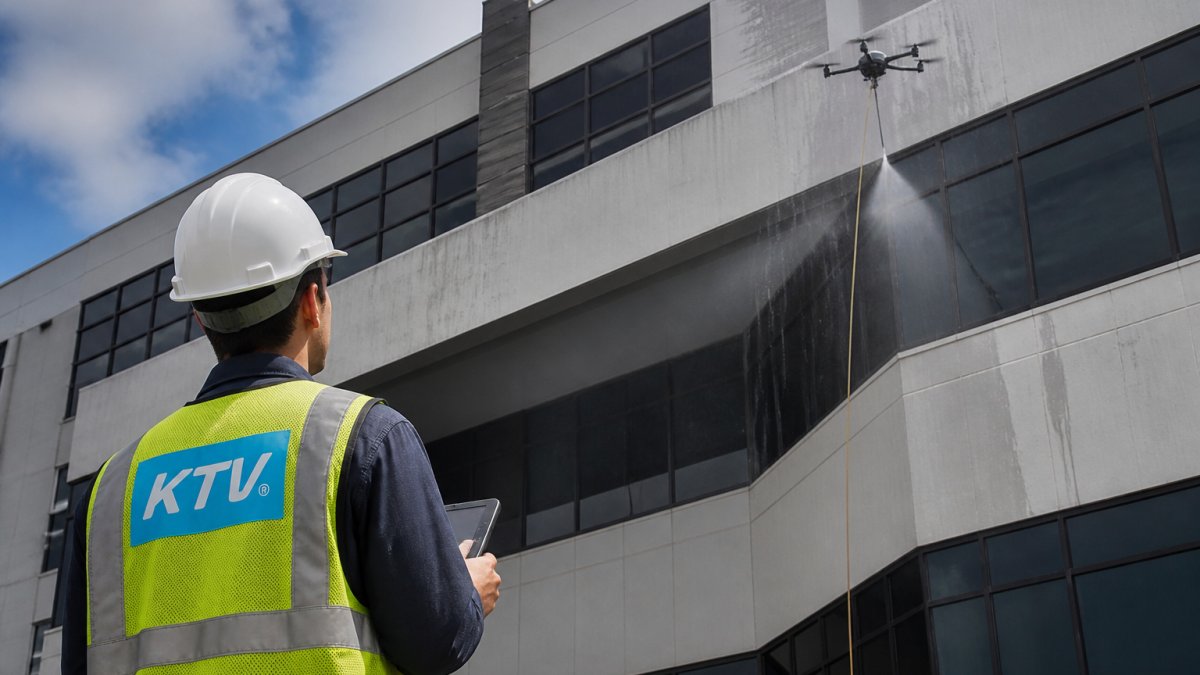
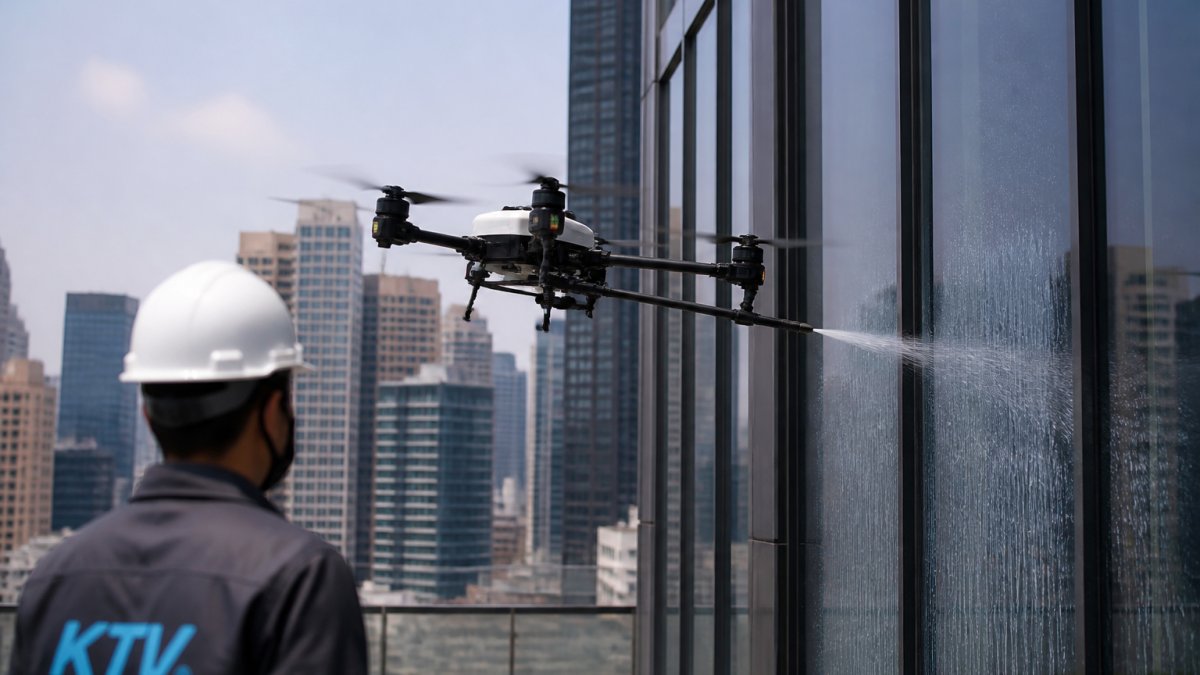
Drone-based cleaning uses autonomous navigation to fly a programmed path and clean panels without touching the mounting structure. There is no hardware on the array itself, so system durability concerns shift to the drone fleet rather than your panels.
Semi-automated systems combine a human operator with powered brushes or sprayers. They cost less upfront but still require labor, and they keep people working at height. They are the right answer for small or irregular arrays where neither rails nor flight paths make sense.
| System Type | Cleaning Mechanism | Best For | Watch Out For |
|---|---|---|---|
| Robotic | Rail-mounted brush, dry or light spray | Large flat ground arrays | Rail install, moving-part wear, brush hardness |
| Drone | Autonomous flight, soft contact head + low-pressure spray | Rooftop and mixed arrays | Weather windows, flight rules, operator certification |
| Semi-automated | Operator-driven powered brush or sprayer | Small sites, tight budgets | Still needs labor at height |
The Decision Criteria That Actually Matter
Before comparing brands, score your site against five practical questions:
- Array geometry. Long, straight rows on a flat roof or ground mount favour rails. Complex, multi-pitch or obstructed rooftops favour drones.
- Water availability. Dry brushing is cheapest to run but less effective on bird droppings and salt film. If your site has no water supply, a dry robot or a drone with an onboard tank is the realistic option.
- Soiling type. Construction dust and pollen respond to dry brushing. Bird droppings, tree sap and coastal salt need moisture and a softer contact head.
- Access and safety. If reaching the array means scaffolding or rope access, the labor cost of semi-automated cleaning usually erases its lower upfront price.
- Monitoring and control. Sensor-based activation and remote scheduling let a system run without daily supervision, but someone still has to review the data, factor that into the operating model.
If you want a deeper look at how drone cleaning compares on output and safety, our guide to the benefits of drone solar panel cleaning breaks it down.
How to Set the Right Solar Panel Cleaning Frequency
There is no universal schedule. Solar panel cleaning frequency should follow your site's soiling rate, not a calendar someone copied from a forum.
Start with a baseline. Check kWh output against a clean reference panel, or review inverter data for a slow downward drift. Then set a cycle and adjust.
- Measure output for two to four weeks after a full clean.
- Track the decline week by week.
- Clean again when output drops past your threshold, often a few percent.
- Log the interval and repeat.
Sites near construction, farmland or industrial exhaust need shorter cycles. Coastal sites face salt film. Rainy-season sites may stretch further between cleans, while the dry months demand more.
For farm and large-site operators, our automated solar panel maintenance guide for farms covers scheduling in more detail.
A common mistake is cleaning too rarely and then overcompensating with harsh scrubbing. That scratches the glass and permanently lowers module efficiency. Gentle, frequent cycles beat aggressive, rare ones.
What to Expect from Solar Panel Energy Output After Cleaning
Solar panel energy output after cleaning typically recovers toward the array's clean-state baseline, and the size of that recovery tells you how much soiling was costing you.
The size of the recovery depends on how long soiling has been allowed to build up and on the environment. The honest answer is that recovery depends on your site, your climate and how long you waited.
Watch these signals after a clean:
- Inverter output returns closer to expected values
- Hot-spot alerts on monitoring systems drop
- Daily peak production rises in clear weather
- Panel temperature readings fall slightly
The savings extend beyond energy. Cleaner panels run cooler, and cooler panels last longer. That protects your operational expenditure over the asset's life.
For documented results across commercial buildings and solar farms, our proven results from 68 countries page shows what real deployments achieved.
Solar Panel Cleaning System Maintenance and Long-Term Durability
Any automated system needs its own upkeep. Solar panel cleaning system maintenance is the part buyers underestimate, and it decides whether the investment holds up over years.
Robotic systems need rail inspection, brush replacement and motor checks. Drone fleets need battery care, propeller inspection and firmware updates. Semi-automated gear needs pump and hose servicing.
The panels themselves benefit from consistency. Regular debris removal prevents the hardened deposits that shorten module life. Sensor-based activation and remote operation reduce the labor burden, but someone still has to review the data.
A practical rule: budget for system maintenance the same way you budget for the cleaning itself. A robot that fails silently is worse than no robot, because you assume the array is clean when it is not.
How to Calculate the ROI of Automated Cleaning
The ROI of automated cleaning comes down to recovered energy minus the cost of cleaning. Build the number yourself; do not trust a vendor's slide. Most competing guides stop at a generic efficiency percentage, the framework below is designed so you can plug in your own figures and get a payback period in months.
The Formula
Net annual benefit = (Recovered kWh × energy tariff in THB per kWh) − annual cleaning cost
Payback period (months) = system or service cost ÷ (net annual benefit ÷ 12)
A positive net benefit means the cleaning pays for itself. A payback period shorter than the expected life of the system means the investment is worth pursuing.
Worked Example
Take a commercial rooftop array. The figures below are illustrative, substitute your own inverter data and tariff.
- Baseline output. Record kWh generated over a clean period.
- Soiled output. Record kWh over the same period before cleaning.
- Lost energy. Subtract soiled from baseline, then multiply by your energy tariff in THB per kWh.
- Cleaning cost. Add the service or system cost over the same period.
- Net gain. Lost energy value minus cleaning cost. Positive means the cleaning pays for itself.
If a clean array would have produced 10,000 kWh and the soiled array produced 9,500 kWh over the same month, the lost energy is 500 kWh. At a tariff of 4 THB per kWh, that is 2,000 THB of lost value in that month. If a drone clean costs less than that, the clean pays for itself in the same month. Run the same arithmetic across a full year, because seasonal dust swings distort short windows.
What to Include Beyond Energy
Most ROI models miss three items that belong in the calculation:
- Safety and insurance savings. Removing work at height reduces incident risk and can lower insurance premiums, ask your insurer how they treat documented, repeatable cleaning.
- Long-term hardware degradation. A system that keeps panels clean extends their productive life. Persistent soiling raises module temperature and hardened deposits can etch the glass; deferred replacement cost belongs in the calculation. This is the angle most ROI models skip.
- System maintenance cost. A robot needs rail inspection, brush replacement and motor checks; a drone fleet needs battery care and firmware updates. A robot that fails silently is worse than no robot, because you assume the array is clean when it is not. Budget for maintenance the same way you budget for the cleaning itself.
For documented results across commercial buildings and solar farms, our proven results from 68 countries page shows what real deployments achieved.
Book a Drone Cleaning Assessment for Your Solar Array
Getting the cleaning cycle right starts with understanding your site's soiling data.
A site assessment can be arranged to review your array and recommend a suitable approach. Our team provides auditable digital records for ESG and compliance reporting.
Best for: commercial rooftops, industrial sites and solar farms that need documented, repeatable cleaning. Skip if: you have a single small residential array you can safely clean yourself.
Frequently Asked Questions
How much can automated solar panel cleaning improve efficiency?
Soiling loss varies with dust, pollen and bird droppings, but in high-dust environments it can build up quickly and reduce kWh output across the whole array. The gain depends on your site's dust load, tilt angle and rainfall. Measure output before and after a full cleaning cycle to see the actual recovery on your installation rather than relying on a generic percentage.
How often should solar panels be cleaned automatically?
Solar panel cleaning frequency depends on local dust accumulation, seasonal haze and rainfall. Sites in high-dust environments usually need more frequent cycles than coastal or well-rained sites. A practical approach is to start with a regular cleaning cycle, track kWh output and soiling loss, then adjust the interval up or down.
Do robotic solar panel cleaners use water?
Both dry cleaning and wet cleaning exist. Dry cleaning removes loose dust and debris without water, which can suit water-scarce sites. The right choice depends on the type of surface contaminants: sticky residues such as pollen or bird droppings usually need some moisture, while loose dust clears well with a dry pass. Check the system's water use before committing.
What maintenance does an automated solar panel cleaner need?
Solar panel cleaning system maintenance is mostly routine: Routine checks are advisable for any automated cleaning equipment, following the manufacturer's guidance. Keep a log of faults and service dates so performance degradation is caught early. System durability improves markedly when maintenance follows the manufacturer's interval rather than waiting for a failure.
Dust will keep costing you output until you put a measured cycle in place. KTV Working Drone Thailand can assess your array, recommend a cleaning frequency, and deliver chemical-free autonomous cleaning with verifiable reporting. Get started with KTV Working Drone Thailand and recover the energy your panels are already losing. Contact us to book your assessment.