 ultimate-guide
What Does Commercial Property Maintenance Compliance Require?
Last Updated: October 25, 2026
Quick Summary
Commercial property maintenance compliance means meeting every legal, safety and recordkeeping obligation that applies to a building, then being able to prove it. Thai law spreads these duties across the Building Control Act, Factory Act, Labour Protection Act safety rules and fire regulations, and the proof matters as much as the work.
- Every compliance task traces back to four duties: keep the structure safe, keep systems working, protect people, and keep records.
- Build your schedule from both statutory intervals and manufacturer recommendations, then set the shorter of the two.
- Work at height is the largest safety exposure on most commercial properties, so eliminate it where you can.
- Write responsibility for each compliance task into the lease and service agreement so it does not default to the owner.
- The most common audit finding is a test with no retrievable certificate, so treat unproven tasks as untested.
Table of Contents
- Commercial Property Maintenance Compliance: What the Law Actually Asks For
- Preventive vs Reactive Maintenance: Why Compliance Lives in the First
- Your Commercial Property Maintenance Checklist, System by System
- How to Build a Commercial Building Maintenance Schedule
- Exterior Building Maintenance Work at Height: Managing the Biggest Risk
- Who Is Responsible: Owners, Managers, Tenants and Contractors
- Commercial Property Maintenance Records That Survive an Audit
- Get a Drone Survey and Close Your Compliance Gaps
- Frequently Asked Questions
Commercial Property Maintenance Compliance: What the Law Actually Asks For
Commercial property maintenance compliance is the practice of meeting every legal, safety and recordkeeping obligation that applies to a building, then being able to prove it.
Thai law spreads those obligations across several pieces of legislation. The Building Control Act governs construction and building safety.
None of these laws uses the phrase "maintenance compliance." That's the trap. The law asks for outcomes, not a single checklist.
The four obligations behind every compliance task
Every task on a commercial property maintenance checklist traces back to one of four legal duties: keep the structure safe, keep systems working, protect people working on the property, and keep records that show you did the first three. Strip away the paperwork and that's the whole framework.
Most compliance failures come from the fourth duty, not the first three. A lift gets serviced, the technician leaves, and the certificate sits in someone's inbox until an inspector asks for it.
The liability picture is worth understanding before you build a schedule. Our guide to eliminating building maintenance liability explains how each obligation translates into exposure for owners and managers.
Preventive vs Reactive Maintenance: Why Compliance Lives in the First
Compliance is a preventive maintenance discipline. Reactive repairs fix what broke; preventive maintenance prevents the break and produces the inspection trail that regulators and insurers expect.
The distinction shows up in how you plan. Reactive work is triggered by a fault report.
Predictive maintenance goes one step further, using equipment condition data to time interventions.
A common mistake is treating preventive tasks as optional when budgets tighten.
Your Commercial Property Maintenance Checklist, System by System
A commercial property maintenance checklist should map every system to its inspection type, frequency and responsible party. Build it once, review it annually, and use it as the backbone of your schedule. Here's how the core systems break down.
Fire and life-safety testing
Fire and life-safety testing covers extinguishers, alarms, emergency lighting, sprinkler systems and evacuation routes.
Testing frequency depends on the system and the applicable regulation. Extinguishers typically need regular inspection, alarms need periodic functional testing, and emergency lighting needs discharge testing at set intervals.
Record every test with the date, the technician, the result and any corrective action taken. An untested alarm and an alarm with no test record look identical to an inspector.
HVAC, plumbing and electrical upkeep
HVAC systems need filter changes, coil cleaning and periodic performance checks to run efficiently and to protect indoor air quality. Plumbing upkeep covers leak detection, pressure checks and drainage inspection.
These systems rarely fail suddenly. They degrade. A maintenance schedule that catches degradation early costs far less than emergency repair, and it keeps the asset condition record clean.

How to Build a Commercial Building Maintenance Schedule
A commercial building maintenance schedule is a calendar that assigns every task a frequency, an owner and an evidence requirement. Build it in five steps:
- List every asset and system in the building, from lifts to emergency lights
- Assign each asset its statutory inspection interval and its manufacturer-recommended service interval
- Set the shorter of the two as your scheduled frequency
- Name the responsible party for each task: in-house team, contractor, or tenant
- Define what evidence the task must produce and where it gets stored
Then load it into a calendar or a CMMS. A spreadsheet works for a single building; a CMMS earns its place once you manage multiple sites or a large contractor roster.
Watch out: schedules built only from manufacturer recommendations miss statutory intervals, and schedules built only from statute miss warranty conditions. You need both columns.
Exterior Building Maintenance Work at Height: Managing the Biggest Risk
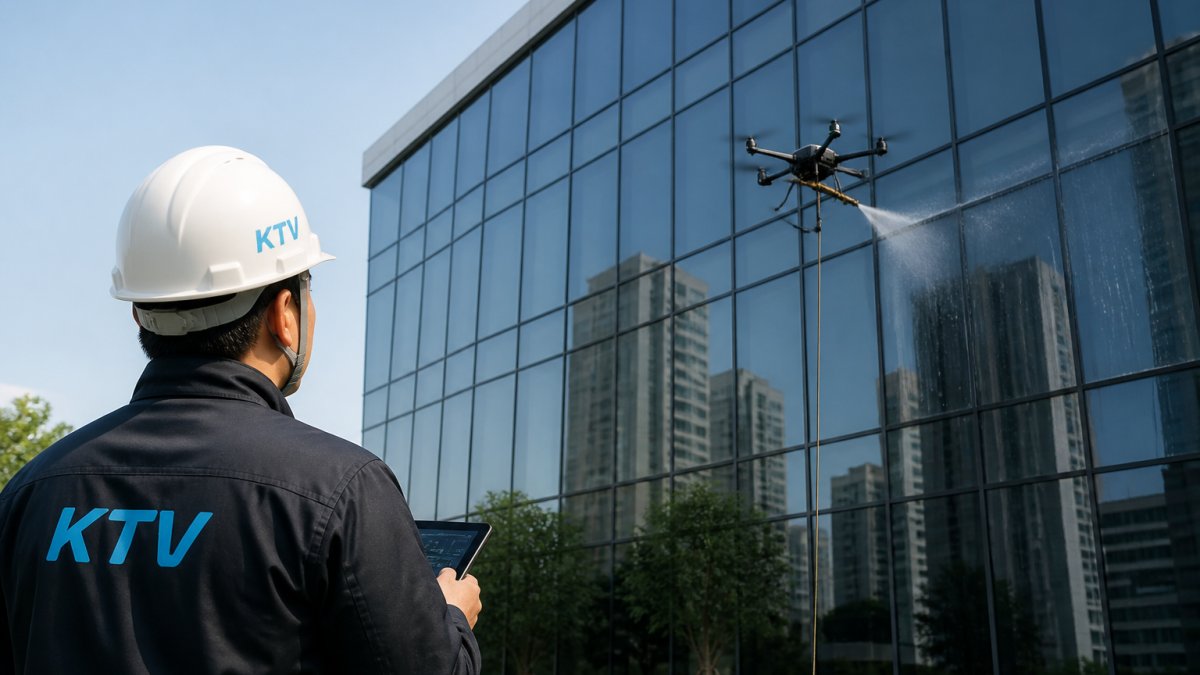
Exterior building maintenance work at height is the single largest safety exposure on most commercial properties.
Thai occupational safety rules require risk assessment and control measures for work at height, including fall protection, trained personnel and safe access equipment.
The risk hierarchy is straightforward: eliminate the work at height where you can, then control it where you can't.
Our work at height safety guide sets out a seven-step framework for reducing this exposure across a property portfolio.
Who Is Responsible: Owners, Managers, Tenants and Contractors
Responsibility splits across four parties, and compliance fails when the split is unclear. The owner carries statutory liability for the building. The property manager runs the schedule and holds the records. Tenants carry obligations for their fit-out and for access. Contractors carry duties for the safety of their own work.
Write the allocation into the lease and the service agreement. Who books the fire test? Who pays for the corrective action? Who holds the certificate?
A simple responsibility matrix solves most disputes. List each compliance task down one side, the four parties across the top, and mark who is accountable, who is consulted and who is informed. Review it whenever a major lease turns over.
Commercial Property Maintenance Records That Survive an Audit
Commercial property maintenance records are the evidence layer of your compliance system. They should be dated, attributable, complete and retrievable within minutes.
Paper files fail this test. They get misfiled, lost in a handover, or damaged.
Audit documentation should capture the task, the date, the person or contractor who performed it, the result, and any corrective action with its close-out date.
For a deeper look at what auditors expect, see our guide to auditable digital records for property maintenance.
What to retain, for how long, and in what form
A defensible record set has four layers, and each layer answers a different question an inspector or insurer will ask.
| Record layer | What it contains | Retention guidance | Format that survives audit |
|---|---|---|---|
| Statutory certificates | Fire test certificates, lift inspection certificates, electrical test certificates, factory inspection records | Retain for the life of the asset plus the statutory limitation period; never discard on contractor changeover | Signed PDF with issue date, asset ID and issuing body |
| Inspection and test reports | Functional test results, earth-continuity readings, flow test reports, façade survey reports | Retain at least the current plus previous two inspection cycles | PDF with technician name, date, readings and pass/fail |
| Work orders and corrective actions | Fault reports, repair orders, close-out notes, parts used | Retain for the asset life or the lease term, whichever is longer | Structured work-order record linked to the originating inspection |
| Photographic and condition evidence | Façade photos, roof condition images, before-and-after repair images | Retain with the inspection report they support | Time-stamped, geotagged images stored with the report |
Retention periods should be confirmed against the applicable Thai statute and your insurer's policy conditions, insurers commonly require evidence to be available for the policy period plus a tail, and a contractor's certificate that has been discarded is treated as a test that never happened.
Structuring the file so an inspector can navigate it
A record set is only audit-ready if a stranger can find any certificate within minutes. The practical structure is asset-based, not date-based: one folder or record per asset (lift, fire panel, sprinkler riser, main switchboard), with sub-records for certificates, inspection reports, work orders and photographs.
Every record should carry five fields: asset ID, task type, date performed, performed by, and outcome with corrective action. A record missing any of these is a gap an inspector will note. Corrective actions need a close-out date and evidence of completion, not just a note that a repair was requested.
Evidence management as a live control, not an archive
Treat evidence management as a control that runs alongside the maintenance schedule, not an archive you tidy before an inspection.
Digital systems earn their place here because they timestamp entries, restrict editing and make retrieval fast. A spreadsheet can work for a single building if it enforces the five fields and the asset-based structure; a CMMS becomes necessary once you manage multiple sites or a large contractor roster.
Get a Drone Survey and Close Your Compliance Gaps
The exterior condition record is where most compliance files are thinnest.
Autonomous drone surveys close that gap.
If you want to understand how the surveys work and what they deliver, our guide to building inspection drones covers the full process.
Most compliance files fail on exterior evidence, not on the fire certificates. If your façade and roof records are thin, get in touch and we'll scope a survey.
Frequently Asked Questions
What should a commercial property maintenance compliance checklist include?
A workable checklist covers every system with a legal or safety duty attached: fire alarms, extinguishers and escape routes; lifts and pressure equipment; HVAC, plumbing and electrical distribution; roof, facade and drainage; and exterior work at height. Each line should record the task, the inspection frequency, the responsible party, the date completed, the person who signed it off and any corrective action raised. Add a document control line so records can be traced during an audit or insurance review.
How often should commercial building maintenance inspections be carried out?
Frequency follows the asset and the risk. Fire and life-safety equipment is typically checked monthly, tested quarterly and inspected annually, while lifts, boilers and pressure vessels follow the cycles set by the inspecting engineer. HVAC filters and belts are usually reviewed quarterly, with a full service annually. Roofs, facades and drainage benefit from checks before and after the rainy season. Build the calendar around legal minimums first, then add preventive intervals based on asset condition and failure history.
How should property managers document maintenance and compliance checks?
Keep one record per task, not one folder per year. Each entry needs a timestamp, the asset identifier, the standard or regulation it satisfies, the result, photographic evidence where relevant, and the name of the person who completed it. Digital records beat paper because they can be searched, exported and time-stamped. For exterior work, drone-captured imagery with flight logs gives you evidence that is independent of the contractor's own report, which is what auditors and insurers tend to ask for.
How can building owners reduce work-at-height risks during exterior maintenance?
Remove the need to put people at height wherever possible. Drone-based facade cleaning and inspection eliminates scaffolding, abseiling and the associated fall risk, and it produces a digital record of the condition of the envelope at the same time. Where manual access is still required, insist on documented method statements, trained and certified crews, harness and anchor inspections, and a permit-to-work system. Review the contractor's insurance and incident history before work starts, not after.
What are the consequences of failing to maintain a commercial property?
The costs stack up in four places. Safety failures can lead to injury, investigation and legal liability for the owner or manager. Insurance claims can be reduced or refused where maintenance records are missing or show overdue tasks. Asset condition deteriorates faster, so repair costs rise and the building's value and rentability fall. Tenant satisfaction drops as faults recur, which shows up in renewals. In practice, the paperwork gap often causes more damage than the physical defect.
How can a maintenance management system help track compliance tasks?
A CMMS turns a static checklist into a live schedule. You load each asset, attach the inspection frequency and the regulation it satisfies, and the system raises work orders automatically when a task falls due. Completed jobs close against the asset, so the audit trail builds itself. Dashboards show overdue items before they become findings, and exports give auditors a clean history. The system only works if the data going in is accurate, so asset registers need reviewing at least annually.