 How-to
7 Drone Cleaning Liability and Insurance Rules to Follow
Last Updated: November 7, 2026
Quick Summary
Drone cleaning liability is the set of written protections a building owner must confirm before any unmanned aircraft touches a facade, deciding who pays when a drone damages property. Confirm three insurance documents before any flight: a certificate of insurance, a third-party liability limit stated in THB, and a hull or equipment policy.
- Ask for a certificate of insurance, a THB liability limit, and a hull policy before any flight.
- A certificate proves cover exists on a date, not that the cleaning activity is covered.
- Confirm the policy is written for commercial operations, not recreational flying.
- Check exclusions for flight over public roads, crowds, and damage to the surface being cleaned.
- Notify the insurer in writing within the time the policy states after any incident.
Table of Contents
- Drone Cleaning Liability and Insurance: What Facility Managers Must Confirm
- Drone Insurance Coverage for Property Damage: What a Policy Actually Pays
- Commercial Versus Recreational Operators: Why the Distinction Decides Your Claim
- Build a Drone Cleaning Risk Assessment Checklist Before Every Job
- Using a Drone Cleaning Method Statement Template to Lock Down Liability
- Policy Exclusions, Contracts and Permits: Where Cleaning Jobs Fall Through the Gaps
- The Drone Incident Response Plan Every Building Should Require
- Get a Quote and Verify the Paperwork Before Your Next Facade Clean
- Frequently Asked Questions
Drone Cleaning Liability and Insurance: What Facility Managers Must Confirm
Drone cleaning liability and insurance is the set of written protections a building owner or operator must confirm before any unmanned aircraft touches a facade.
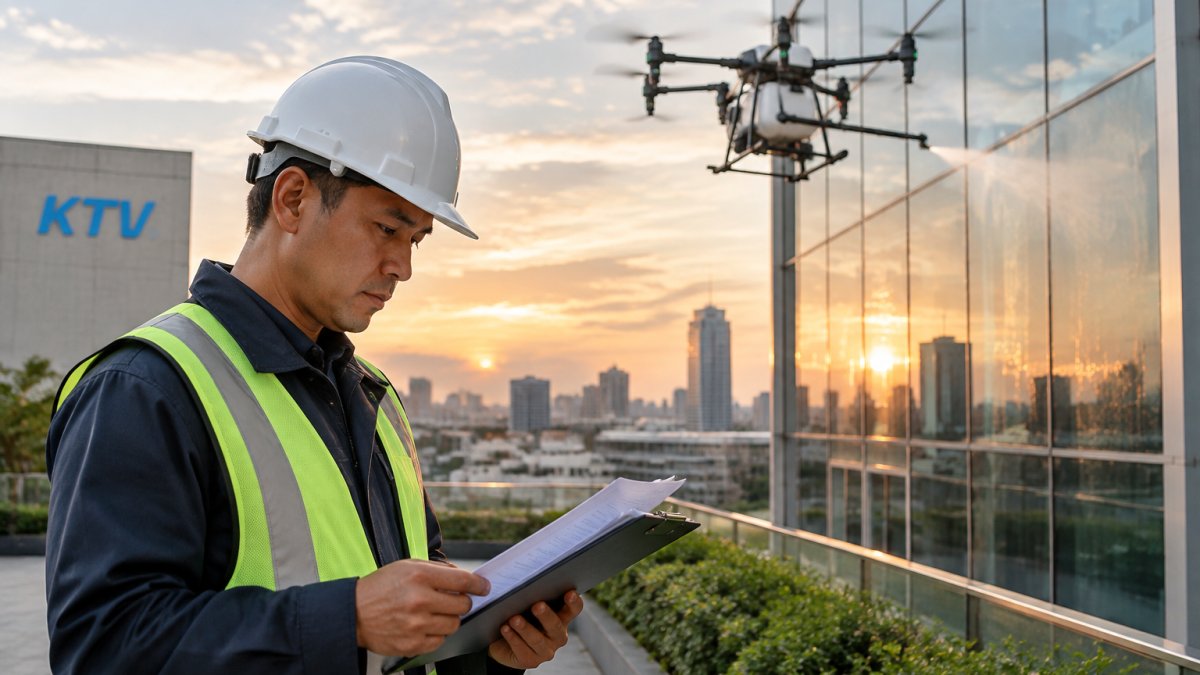
Commercial drone work in Thailand is subject to aviation regulation, so any provider on your site should be able to show current approval from the relevant authority.
Below, we break down the seven rules we would apply to any facade cleaning contract. For the deeper same-topic guide, see our drone building maintenance liability and insurance guide.
The Three Insurance Documents to Request Before Any Flight
Ask for three things, every time:
- A certificate of insurance naming the drone operator, with the policy period still active.
- A third-party liability limit stated in THB, not left blank.
- A hull or equipment policy covering the aircraft itself.
A certificate of insurance is a one-page summary from the insurer. It proves cover exists on the date shown. It is not the full policy, but it is enough to confirm the basics.
Watch out: a certificate with no expiry date or no named insured offers little assurance. Ask for a corrected version.
Before any drone lifts off, confirm these three insurance documents are in place and current.
| Document | What it proves | Watch out for |
|---|---|---|
| Certificate of insurance | Cover exists on the date shown | No expiry date or no named insured |
| Third-party liability limit | Limit stated in THB | Limit left blank |
| Hull or equipment policy | Covers the aircraft itself | Missing cover for the drone |
Drone Insurance Coverage for Property Damage: What a Policy Actually Pays
Drone insurance coverage for property damage pays for harm the aircraft causes to someone else's property. That includes a cracked glass panel, a dented car roof, or a damaged air-conditioning unit on a roof.
The payout depends on three numbers: the liability limit, the deductible, and the insured value of the drone. A high limit with a large deductible still leaves you exposed on small claims.
Third-Party Liability Versus Hull Coverage
Third-party liability covers damage to other people's property and injury to people. Hull coverage protects the drone and its equipment against physical damage, theft, and loss.
Most cleaning contracts live or die on the third-party side. That is where a claim against the building owner lands.
Commercial Versus Recreational Operators: Why the Distinction Decides Your Claim
A recreational operator flies for fun. A commercial operator flies for payment. Insurers price these very differently, and a claim can be denied if the flight was commercial but the policy was not.
So ask one direct question: is this policy written for commercial operations? If the answer is vague, treat it as no.
For cleaning work, the operator should also carry:
- A current drone registration for each aircraft
- Pilot training records for the person flying
- A site survey and pre-flight checks on file
- A named risk assessment for the job
A quote that skips these steps may leave liability exposed.
Build a Drone Cleaning Risk Assessment Checklist Before Every Job
A drone cleaning risk assessment checklist is a short document that names the hazards of one specific job and the controls for each. It is not a generic form. It changes with the building.
We would run it in this order:
- Map the flight path around glass, signage, and rooftop equipment.
- Check wind and weather against the operator's limits.
- Mark people and traffic below the work area.
- Confirm the drone's insured value matches the aircraft on site.
- Record the pilot's name and licence.
- Note the nearest hospital and an emergency contact.
- Sign off before the first flight.
For a deeper walk-through of height safety controls, see our guide on how to reduce work at height risks.
Using a Drone Cleaning Method Statement Template to Lock Down Liability
A drone cleaning method statement template sets out how the work will be done, step by step. It is the document that turns a verbal promise into a record you can point to later.
A workable template covers:
- Scope: which facades, which dates, which surfaces.
- Method: autonomous flight path, chemical-free process, water use.
- Plant and equipment: drone model, insured value, registration number.
- Supervision: who is on site and who signs off.
- Incident steps: who calls whom, and in what order.
- Exclusions: what the operator will not touch, such as fragile cladding.
Keep the signed version. If a dispute ever reaches an insurer, the method statement is the first thing they will read.
Policy Exclusions, Contracts and Permits: Where Cleaning Jobs Fall Through the Gaps
Most claim disputes do not come from bad flying.
Start with the exclusions that bite cleaning operators hardest. Read the actual policy wording, not the certificate or the broker's summary, and check for:
- Operations outside the approved area or time window. Many policies tie cover to the flight area and hours declared at inception. A night clean or a launch point on an adjacent roof can fall outside cover.
- Flight over public roads, crowds, or assemblies. Cleaning a street-facing facade often means overflying a footpath. If the policy excludes flight over people or traffic, the contract and the policy are misaligned.
- Chemical overspray, runoff, and pollution. Even where the cleaning process is water-only, insurers may attach a pollution or contamination exclusion that sweeps in runoff staining, sealant damage, or water intrusion into the building envelope.
- Damage to the surface being cleaned. This is the exclusion cleaning operators miss most often. A policy may cover third-party property damage generally but exclude damage to the property that is the subject of the work, meaning the cracked panel or etched glass the client is most likely to claim for.
- Work performed at height. Some policies carry height limits or exclude work above a stated level. Confirm the limit against the tallest facade in the contract.
- Unregistered aircraft, unlicensed pilots, or unapproved operations. Regulatory non-compliance is a standard denial trigger, so registration and permit status are insurance facts, not just paperwork.
Watch out: a certificate of insurance proves cover exists on a date; it does not prove the cleaning activity is covered.
Then match the exclusions to the contract, clause by clause.
Permits and third-party requirements add a second layer.
Contracts and tenders frequently impose insurance requirements the operator must evidence before mobilisation. Check for:
- Minimum third-party liability limits stated in THB, and whether the limit is per occurrence or in aggregate.
- Additional insured status for the building owner or facility manager, and whether the policy can actually endorse it.
- Waiver of subrogation so the insurer cannot pursue the client after paying a claim.
- Certificate of insurance delivery before the first flight, with the policy period covering the full contract term.
- Notification duties if the scope, height, or flight area changes mid-contract.
Our guide on eliminating building maintenance liability covers how these gaps get closed in practice.
The Drone Incident Response Plan Every Building Should Require
A drone incident response plan is a one-page instruction sheet for the first hour after something goes wrong.
Require these steps, in this order:
- Stop all flights and ground the aircraft. Do not launch a second drone to inspect the damage; that compounds the record and can void cover.
- Secure the area and check for injuries. Clear pedestrians from below the work zone, close the footpath if needed, and call emergency services for any injury before anything else.
- Preserve the flight record. Export the flight log, telemetry, and any onboard video before the aircraft is powered down or the app session closes. Note the pilot name, licence number, aircraft registration, and the time of the event.
- Photograph and video the scene before anything is moved: the aircraft, the impact point, the damaged surface, the ground below, and any affected vehicle or property. Take wide shots and close-ups, and include a scale reference where possible.
- Document cleaning-specific damage. For surface claims, photograph the panel or facade in raking light to show cracks, chips, etching, or sealant damage. For water intrusion, photograph interior staining, check ceiling tiles and electrical fittings, and record moisture readings if the building has a meter. For chemical or runoff claims, photograph staining, capture the product used, and note the dilution and application rate.
- Notify the insurer within the time the policy states. Most policies impose a prompt-notification condition; late notice is a common reason for reduced or refused claims. Notify in writing and keep the acknowledgement.
- Notify the building owner and facility manager in writing, with a short factual summary and no admission of liability. Route all communication with affected third parties through the insurer or a single nominated contact.
- File a written incident report with the building and the operator, signed and dated, attaching the photographs, flight log, and witness details.
Assign roles before the job, not after. The pilot controls the aircraft and the flight record. The site supervisor controls the ground exclusion zone and third-party communication.
Keep a claim file per job: the signed method statement, the risk assessment, the certificate of insurance, the flight log, the pre-clean condition photographs, and the post-incident report.
Finally, test the plan.
Get a Quote and Verify the Paperwork Before Your Next Facade Clean
Start with the paperwork, then the price. A quote that looks low often hides a thin policy, an unregistered aircraft, or a pilot without commercial cover.
KTV Working Drone Thailand provides auditable digital records and independently verifiable ESG data, and its autonomous process eliminates scaffolding and manual abseiling, removing work-at-height risk from the site.
Before you commit, work through the steps to hiring professional drone building cleaners so nothing is missed. When you are ready, request a quote for drone building maintenance and we will confirm the documents you need.
The real test of a drone cleaning contract is not the price on page one.
Frequently Asked Questions
What insurance does a commercial drone cleaning operator need?
A commercial operator should carry third-party liability cover for bodily injury and property damage caused to others, plus hull or physical damage cover for the drone and equipment. Ask for a certificate of insurance naming the current policy period, the liability limits, and confirmation that commercial cleaning work is a declared use. Confirm the policy is active on the date of the flight, and check whether the drone fleet and any subcontracted pilots are listed.
Does drone insurance cover damage to a building during cleaning?
Third-party property damage cover is the section that responds when a drone strikes a facade, breaks glazing or damages a rooftop unit. It does not automatically cover everything: overspray onto vehicles, chemical runoff into drains, and damage to property the operator is contractually responsible for caring for may sit in exclusions. Read the policy schedule and ask the operator to confirm in writing which cleaning-specific scenarios are covered before work starts.
Who is liable if a cleaning drone injures someone or damages property?
Liability usually rests with the operator as the party controlling the flight, but the building owner or facility manager can share exposure through contract terms, permit conditions and site hazards they control. A clear method statement, a documented risk assessment and an incident response plan shift the practical burden back to the operator. Contract clauses should state who handles claims, who notifies insurers, and what evidence is preserved at the scene.
How can operators reduce liability risks during drone building maintenance?
Start with a written drone cleaning risk assessment checklist covering weather limits, exclusion zones, tether points, pedestrian control and emergency landing areas. Pair it with pre-flight checks, pilot training records and a method statement template that matches the actual building. Keep the drone registration and CAAT permissions current, log every flight, and review incidents after the fact. Documented controls are also what insurers weigh when setting premiums and deductibles.