 how-to
Is Drone Cleaning Safe for Glass Facades? 2026 Guide
Table of Contents
- How Drone Cleaning Works for Glass Facades
- Safety Benefits of Drone Cleaning vs Rope Access and Scaffolding
- Autonomous Facade Cleaning Benefits for Commercial Buildings
- Drone Window Cleaning Safety Standards and Regulatory Compliance
- Surface Damage Prevention Protocols for Glass and Facade Materials
- Limitations and Risk Mitigation: Weather, Wind, and Access Constraints
- Conclusion: Making an Informed Decision for Your Building
- Frequently Asked Questions
Last Updated: October 4, 2026
How Drone Cleaning Works for Glass Facades
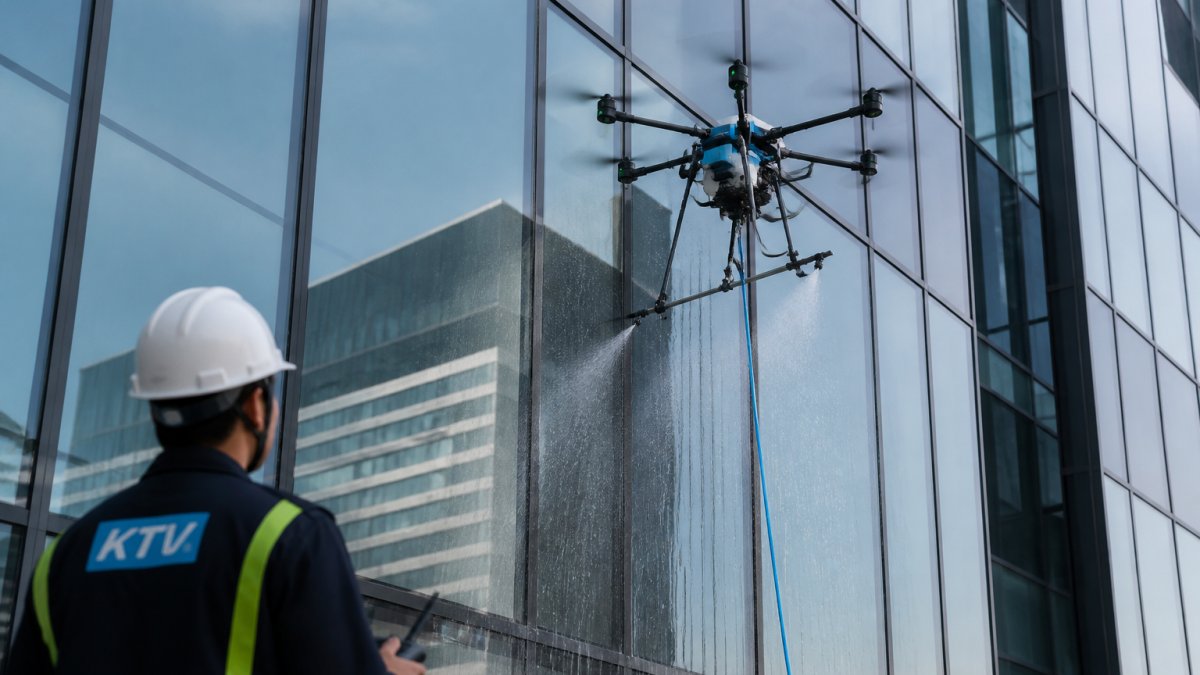
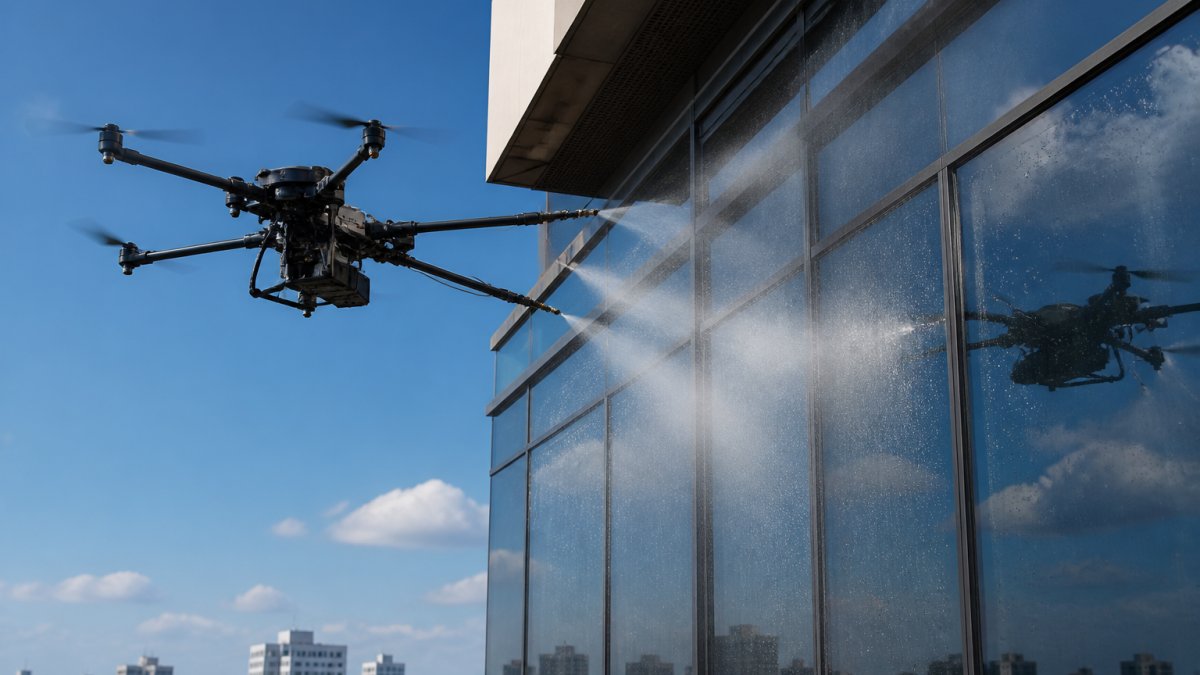
Is drone cleaning safe for glass facades? A facade cleaning drone sprays purified water onto the glass while its rotors hold it steady against the building.
At KTV Working Drone Thailand, we run this process on various commercial and industrial properties. The drone is fully autonomous and chemical-free. It flies a set route, cleans the panel, and logs the pass.
The Role of Demineralized Water in Glass Cleaning
Water quality decides the result. Tap water carries calcium and magnesium. When it dries on glass, those minerals stay behind as lime scale and white spotting.
Demineralized water is water with those minerals removed through a purified water system. It dries clean, with nothing left on the pane. That is the whole reason drone window cleaning can beat a squeegee on streak prevention.
Nozzle Technology and Pressure Control
Pressure control protects the glass. Too much force can stress seals and frames. Too little leaves mineral deposits behind.
Modern drone platforms use fan nozzles that spread water evenly at low pressure. Flight stability keeps the spray angle constant across the whole facade. That combination is what keeps surface integrity intact.
Safety Benefits of Drone Cleaning vs Rope Access and Scaffolding
The safety case is simple: remove the person from height. Rope access and scaffolding both put workers on the building. A drone does not.
That single change removes the biggest risk in facade cleaning. It also removes the setup that goes with it.
Risk Reduction for High-Rise Maintenance
Work-at-height incidents are the main reason insurers and safety officers push back on exterior cleaning. International Labour Organization guidance on occupational safety and health treats falls from height as a leading cause of serious workplace injury worldwide.
A drone removes that exposure entirely. Ground crew stay on the ground. Safety protocols shift from harness checks to flight checks.
Efficiency and Speed Compared to Traditional Methods
Setup time is where traditional methods lose. Scaffolding takes days to erect. Rope access needs anchor points, permits, and a rigging check.
A drone launches in minutes. Our chemical-free process runs up to 80% faster than traditional methods. On a large building envelope, that gap compounds across every cleaning cycle.
| Method | Setup Time | Worker at Height | Typical Disruption |
|---|---|---|---|
| Scaffolding | Days | Yes | High, blocks access |
| Rope access | Hours | Yes | Medium |
| Drone cleaning | Minutes | No | Low |
Autonomous Facade Cleaning Benefits for Commercial Buildings
Autonomous facade cleaning benefits go beyond safety. The drone flies the same route every cycle, so results stay consistent. It also works around tenant schedules.
That matters for commercial building maintenance. You can clean a facade without closing a lobby entrance or blocking a loading bay.
Environmental Impact and Sustainability
No scaffolding means no truckloads of steel, no diesel generators, and no chemical runoff. Our process delivers a 96% reduction in CO2 emissions.
For sustainability officers, that is reportable data. GRESB framework for real estate ESG benchmarking lets property firms submit verified environmental performance. A drone provider that logs each flight gives you numbers an auditor can trace.
Operational Efficiency and Cost Considerations
Pricing depends on building height, glass area, access, and cleaning frequency. We quote per project rather than publishing a flat rate, because a 40-storey tower and a two-storey retail unit are not the same job.
What we can say: fewer crew hours, no scaffolding rental, and longer maintenance cycles usually lower the total cost of ownership. Ask for a quote with your building details and we will scope it.
Drone Window Cleaning Safety Standards and Regulatory Compliance
Drone window cleaning safety standards in Thailand centre on two things: who may fly, and who carries the risk. Both are checkable before you sign anything.
CAAT Certification and Operational Requirements
Commercial drone flights in Thailand fall under the Civil Aviation Authority of Thailand. Operators need registration, pilot licensing, and in many cases a flight permit for the specific area.
Ask for the certificate. Ask for the permit for your site. A serious operator will have both ready. Civil Aviation Authority of Thailand drone regulations sets out the current requirements.
Insurance and Liability Coverage
Insurance is the question facility managers ask us most. If a drone malfunctions over your building, who pays?
The answer sits in the operator's policy. Ask for the coverage limit, what it covers, and whether it names damage to the building surface. Get it in writing before work starts.
Surface Damage Prevention Protocols for Glass and Facade Materials
Most damage claims trace back to one cause: the wrong method on the wrong surface. Prevention starts with a site check before the first flight, and it continues with three controls that must be set per building, not per company.
Types of Surfaces Suitable for Drone Cleaning
- Tempered and laminated glass: well suited. Laminated interlayers can soften at edges if pressure is misdirected, so keep the spray perpendicular and low.
- Coated and tinted glass: suitable with pressure control. Low-E and reflective coatings are thin films; abrasive contact or high-impingement spray can dull them permanently.
- Aluminium composite panels: suitable. Check that panel seams are sealed before spraying, because water driven into an open seam can migrate behind the panel.
- Concrete and stone: suitable with adjusted nozzles. Porous stone may need a lower flow rate to avoid over-wetting and runoff staining.
- Sealed timber or degraded render: needs assessment first. Failed sealant and friable render can be lifted by spray force.
Pressure, Nozzle Type, and Glass Chemistry
Three variables decide whether a drone clean protects or damages the facade.
1. Operating pressure at the glass. Most facade glass is comfortable in a low-pressure band, typically a few bar at the nozzle, not the high-pressure jetting used on concrete.
2. Nozzle type and spray pattern. Fan nozzles spread water across a wide, even band at low impact. They are the default for coated and tinted glass because they avoid the concentrated point force of a pencil jet.
3. Water chemistry. Demineralized water does more than dry spot-free. Removing calcium and magnesium also removes the minerals that can leave micro-abrasive residue if a droplet is dragged across the pane.
Post-Cleaning Inspection Standards
Inspection should be documented, not eyeballed. A defensible protocol has four steps:
- Pre-flight baseline. Photograph each facade section before cleaning, with a timestamp and panel reference.
- Post-pass capture. Photograph the same sections after the pass, from the same angle where possible.
- Defect log. Record any pre-existing scratches, sealant gaps, or coating wear so they are not attributed to the clean.
- Sign-off. File the images against the flight record so a facility manager can retrieve them by date and panel.
That gives you an auditable digital record. If a tenant reports a streak, you have a timestamped image to check. It also supports ESG reporting, because the evidence exists independently of the operator's word.
Limitations and Risk Mitigation: Weather, Wind, and Access Constraints
Wind is the hard limit, and it is the limit most often underestimated. A drone holding a spray pattern against a facade is fighting two forces at once: the wind pushing it off station and the reaction force of the water. Most commercial facade-cleaning platforms stop flying above a set wind speed, commonly in the range of 8 to 10 metres per second at the drone's altitude, which is lower than what a rope crew would tolerate. Gusts matter more than average wind, because a gust can push the drone toward the glass faster than the flight controller can correct.
Wind, Humidity, and Temperature Thresholds
- Sustained wind: most platforms operate comfortably below roughly 8 m/s. Above that, spray drift increases and the pass becomes uneven.
- Gusts: a gust spread of more than a few m/s above the sustained figure is a stop condition, even if the average looks acceptable.
- Humidity: high humidity slows drying and can leave a haze if the pass is too slow. Very low humidity can dry droplets before they lift the soil, causing streaks.
- Temperature: near-freezing conditions risk ice on the glass and on the drone's lines. Direct sun on dark glass can dry the surface faster than the pass can clean it.
- Rain and lightning: stop work outright. Rain re-deposits minerals and lightning is a hard no-fly condition.
Access, Airspace, and Scheduling Constraints
Access is the second limit. Dense cabling, tight courtyards, overhanging structures, and adjacent towers can block a flight path or force a longer approach. A site survey flags these before scheduling, and it should also check for local airspace restrictions and any permit conditions that limit flight times or altitudes.
Scheduling is the third limit, and it is where operators earn or lose trust. Weather delays happen. A good operator builds buffer days into the plan, tracks the forecast against the wind thresholds above, and does not bill you for a job that could not be flown.
Conclusion: Making an Informed Decision for Your Building
Drone cleaning is safe for glass facades when the operator controls water quality, pressure, certification, and inspection. Ask for the CAAT permit, the insurance certificate, and the post-clean report. Those three documents tell you more than any brochure.
KTV Working Drone Thailand provides fully autonomous drone cleaning with zero work-at-height risk, a chemical-free process, and auditable digital records for compliance. We are a GRESB Solution Provider.
Get a quote from KTV Working Drone Thailand and see how a documented, low-risk facade cleaning plan fits your building.
Frequently Asked Questions
Can drones effectively clean high-rise glass without damaging the surface?
Yes, when operated with proper pressure control and demineralized water. Modern drone cleaning systems use soft-touch nozzles and low-pressure spray to remove mineral deposits and debris without scratching glass. Surface integrity is maintained because the process avoids abrasive contact. Post-cleaning inspections verify no streaks or damage, and operators follow strict protocols to prevent lime scale buildup. This makes drone cleaning safe for glass facades when performed by certified providers.
What are the safety protocols for drone facade cleaning?
Safety protocols include pre-flight risk assessments, weather monitoring for wind and rain, and maintaining a safe distance from building surfaces. Operators must hold CAAT certification and follow operational requirements for flight stability. Pressure control and nozzle technology are calibrated to avoid surface damage. Emergency procedures cover drone malfunction, and insurance coverage protects against liability. These steps ensure risk reduction for high-rise maintenance and compliance with local regulations.
How does autonomous drone cleaning compare to manual rope access?
Autonomous drone cleaning eliminates work-at-height risks associated with rope access and scaffolding. It is up to 80% faster and reduces CO2 emissions by 96% compared to traditional methods. Drone systems provide consistent pressure and coverage, reducing human error and surface damage. While rope access may be needed for complex geometries, drones offer superior safety, efficiency, and environmental sustainability for most commercial building maintenance tasks.
Are there specific regulations for operating cleaning drones near buildings?
Yes. In Thailand, operators must comply with CAAT regulations for commercial drone operations, including certification and flight permissions. Building owners should verify that providers carry adequate insurance and follow safety protocols. Regulatory compliance also involves adhering to local building maintenance codes and environmental standards. KTV Working Drone Thailand meets these requirements and provides auditable digital records for ESG reporting and insurance purposes.